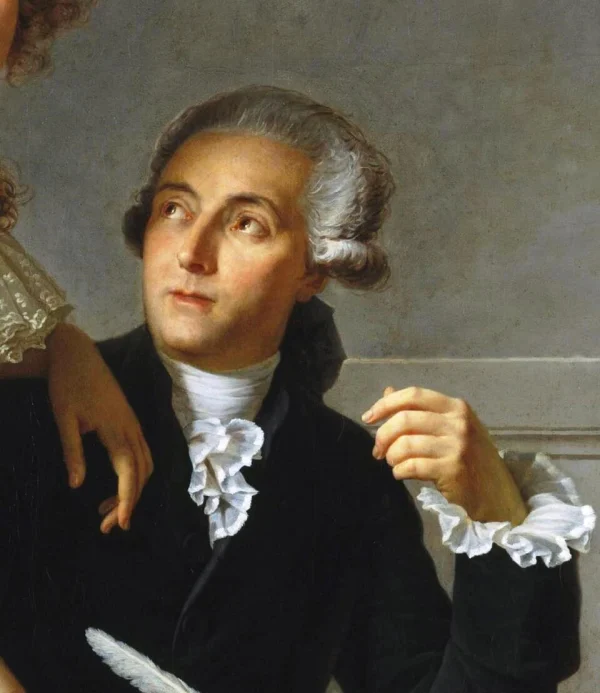
Antoine Lavoisier (1743–1794) was a French nobleman and chemist central to the 18th-century chemical revolution. He studied the role of oxygen in combustion and helped shape modern chemical measurement and nomenclature.
Antoine LavoisierSource portrait · Jacques-Louis DavidWikimedia Commons · Public domainResized and converted; display may crop to fit.
The person behind the words
Life & biography
Antoine Lavoisier, born on 26 August 1743 and executed on 8 May 1794, was a French nobleman and chemist. His work helped transform chemistry from a largely qualitative discipline toward quantitative measurement. He is noted for identifying oxygen’s role in combustion and for recognizing oxygen and hydrogen as elements.
Using more precise measurements, Lavoisier confirmed that mass is conserved in a closed system despite changes in matter’s form. He helped develop the metric system, compiled an extensive list of elements that predicted silicon, and contributed to chemical nomenclature reform. He also served as an administrator of the Ferme générale; after his execution during the French Revolution, the French government exonerated him a year and a half later.