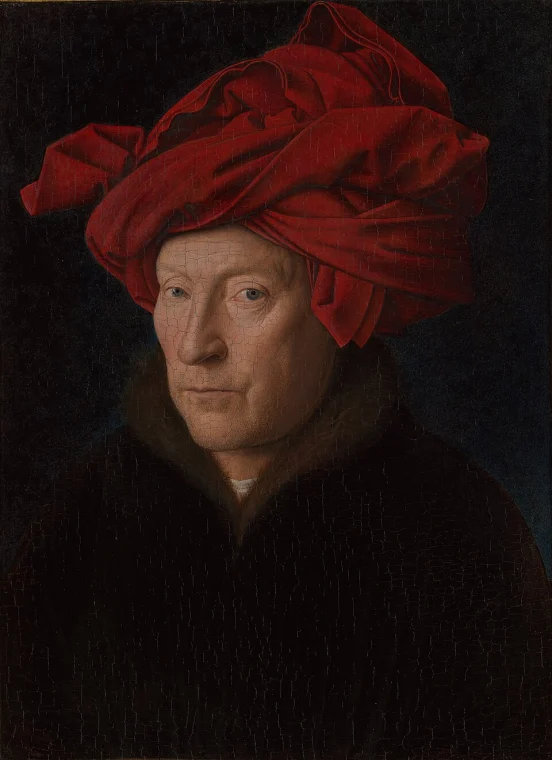
Jan van Eyck was an early Netherlandish painter active in Bruges and a major figure of the Early Northern Renaissance. He served as court painter to Philip the Good and is known for his work in oil paint.
Jan van EyckSource portrait · Jan van EyckWikimedia Commons · Public domainResized and converted; display may crop to fit.
The person behind the words
Life & biography
Jan van Eyck was an early Netherlandish painter active in Bruges and one of the important figures of the Early Northern Renaissance. Surviving records place his birth around 1380 or 1390 in Maaseik, though the precise date is not established here. He worked in The Hague from around 1422 and later served as court painter to Philip the Good, Duke of Burgundy.
Van Eyck moved to Bruges in 1429 and remained there until his death on 9 July 1441. About 20 surviving paintings are confidently attributed to him, alongside the Ghent Altarpiece and illuminated miniatures of the Turin-Milan Hours. His developments in oil paint and his emphasis on naturalism influenced the Early Netherlandish school. The familiar claim that he invented oil painting is described in the source as an oversimplification.