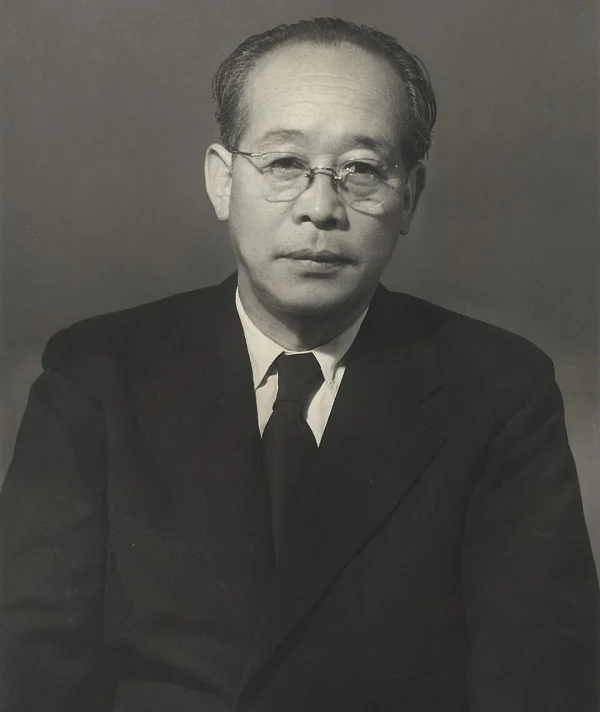
Kenji Mizoguchi (1898–1956) was a Japanese filmmaker who directed roughly one hundred films between 1923 and 1956. His work often examined the oppression of women in historical and contemporary Japan.
Kenji MizoguchiSource portrait · Unknown authorUnknown authorWikimedia Commons · Public domainResized and converted; display may crop to fit.
The person behind the words
Life & biography
Kenji Mizoguchi (溝口 健二; 16 May 1898 – 24 August 1956) was a Japanese filmmaker whose directing career ran from 1923 to 1956, during which he made roughly one hundred films. A recurring theme in his work was the oppression of women in historical and contemporary Japan.
Among his acclaimed films were The Story of the Last Chrysanthemums (1939), The Life of Oharu (1952), Ugetsu (1953), and Sansho the Bailiff (1954). The latter three received awards at the Venice International Film Festival. Alongside Akira Kurosawa and Yasujirō Ozu, Mizoguchi is regarded as a representative of the golden age of Japanese cinema.