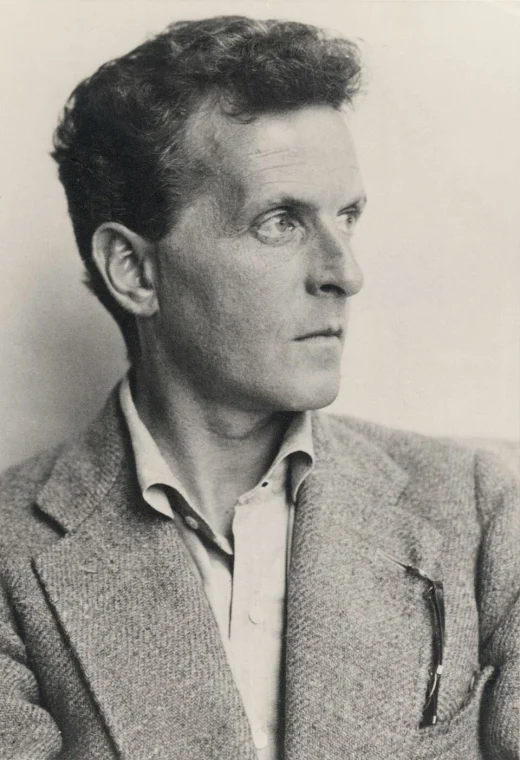
Ludwig Wittgenstein (1889–1951) was an Austro-British philosopher whose work addressed logic, mathematics, mind, and language. His major works include the Tractatus Logico-Philosophicus and the posthumously published Philosophical Investigations.
Ludwig WittgensteinSource portrait · Moritz NährWikimedia Commons · Public domainResized and converted; display may crop to fit.
The person behind the words
Life & biography
Ludwig Wittgenstein was born in Vienna on 26 April 1889. From 1911 to 1913, he studied at the University of Cambridge under Bertrand Russell. He left academic life to serve in the Austro-Hungarian Army during the First World War. His Tractatus Logico-Philosophicus appeared in 1921, followed by an English translation in 1922.
Wittgenstein returned to Cambridge and taught philosophy there from 1930 to 1947. During the Second World War, he worked at Guy’s Hospital in London and the Royal Victoria Infirmary in Newcastle upon Tyne. He died on 29 April 1951. Philosophical Investigations, a major work of his later philosophy, was published posthumously in 1953.