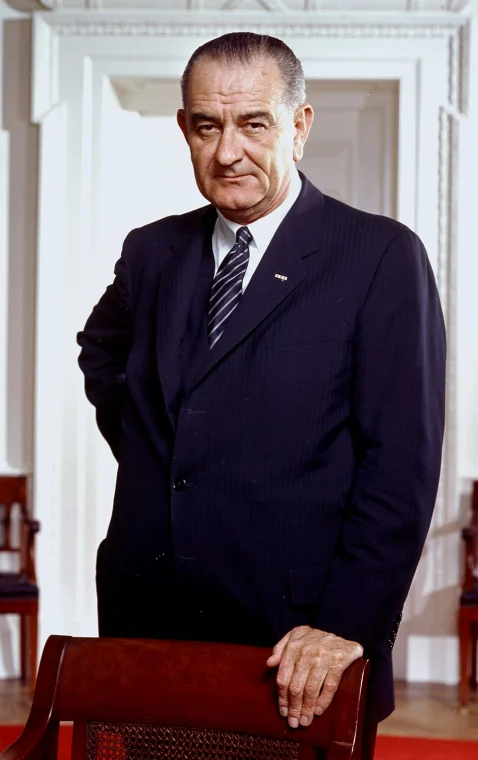
Lyndon B. Johnson (1908–1973) was the 36th president of the United States, serving from 1963 to 1969. His domestic agenda, known as the Great Society, included major civil rights, health care, education and social welfare measures.
Lyndon B. JohnsonSource portrait · Arnold NewmanWikimedia Commons · Public domainResized and converted; display may crop to fit.
The person behind the words
Life & biography
Lyndon Baines Johnson was born in Stonewall, Texas, on August 27, 1908. After working as a teacher and congressional aide, he was elected to the U.S. House of Representatives in 1937. He later served as a senator and became Senate majority leader in 1955. In 1960, he joined John F. Kennedy’s presidential ticket as the vice-presidential running mate.
Johnson became president after Kennedy’s assassination in 1963 and won election in his own right in 1964. His Great Society agenda included the Social Security Amendments of 1965, which created Medicare and Medicaid, and major civil rights and education laws. His presidency also saw escalating U.S. involvement in the Vietnam War, which drew substantial criticism. He withdrew from the 1968 presidential race and died on January 22, 1973.