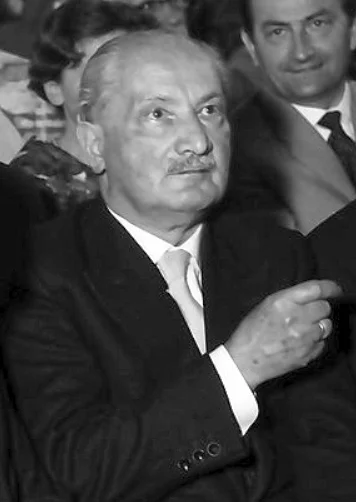
Martin Heidegger (1889–1976) was a German philosopher whose work helped shape phenomenology, hermeneutics, and existentialism. His influential book Being and Time (1927) examined human existence and the question of being.
Martin HeideggerSource portrait · Willy PragherWikimedia Commons · CC BY-SA 3.0Resized and converted; display may crop to fit.
The person behind the words
Life & biography
Martin Heidegger (26 September 1889 – 26 May 1976) was a German philosopher whose work was central to the development of phenomenology, hermeneutics, and existentialism. In Being and Time (1927), he analyzed human existence through the concept of Dasein and sought to renew what he called the question of being.
His later work addressed technology, language, art, and poetry. Heidegger’s legacy is complicated by his involvement with Nazism: he joined the Nazi Party in 1933 and remained a member until 1945. The relationship between his political choices and philosophy remains a subject of scholarly controversy.