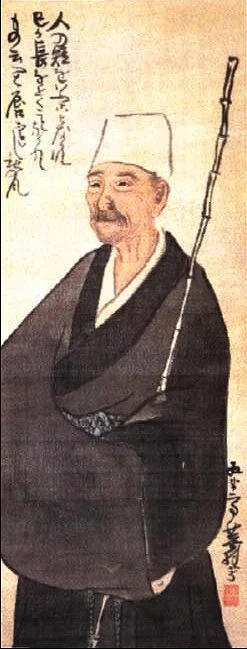
Matsuo Basho was an Edo-period Japanese poet and teacher, known for his work in collaborative haikai no renga and for his hokku. He also wrote travel essays, including Records of a Weather-Exposed Skeleton (1684).
Matsuo BashoSource portrait · unknownWikimedia Commons · Public domainResized and converted; display may crop to fit.
The person behind the words
Life & biography
Matsuo Basho (born Matsuo Kinsaku and later known as Matsuo Chūemon Munefusa) was a poet of Japan’s Edo period. Introduced to poetry at a young age, he became known for collaborative haikai no renga and made a living as a teacher.
Basho later left the urban literary circles and traveled through Japan, drawing on firsthand experience of landscapes and scenes in his writing. His travel essays include Records of a Weather-Exposed Skeleton, written after a journey west to Kyoto and Nara in 1684. In his lifetime, he regarded his work in linking haikai verses as especially revealing of his poetic identity.