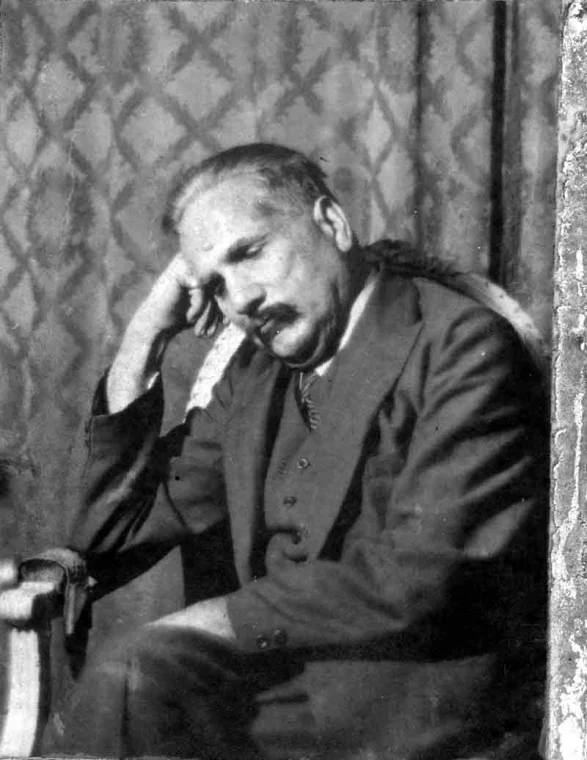
Allama Iqbal (1877–1938) was a poet and Islamic philosopher whose Urdu and Persian works include Asrar-e-Khudi, Rumuz-e-Bekhudi and Bang-e-Dara. He also wrote and spoke on politics, philosophy and religion.
Allama IqbalSource portrait · Amrita Sher-GilWikimedia Commons · Public domainResized and converted; display may crop to fit.
The person behind the words
Life & biography
Allama Iqbal was born in Sialkot, then in British India, on 9 November 1877. He studied in Sialkot and Lahore, taught Arabic at Lahore’s Oriental College from 1899 to 1903, and pursued further study in England and Germany. He earned a philosophy doctorate in Munich in 1908 and qualified as a barrister at Lincoln’s Inn.
After returning to Lahore in 1908, Iqbal practised law while concentrating chiefly on writing. His works include the Urdu poetry collections Asrar-e-Khudi, Rumuz-e-Bekhudi and Bang-e-Dara, as well as Persian-language literature. His lectures on the revival of Muslim thought were published as The Reconstruction of Religious Thought in Islam in 1930. He was elected to the Punjab Legislative Council in 1927 and delivered the Allahabad Address in 1930. He died on 21 April 1938.