People • life • ideas

Annie Besant Quotes

एनी बेसेंट

Writer, educationist and Home Rule activist

Annie Besant was a British writer and activist whose work ranged from socialism and women's rights to Theosophy and Indian Home Rule. She became the first woman president of the Indian National Congress in 1917.

20Published quotes

Explore ideasKnowledge · Rational Thought · Integrity

Annie Besant
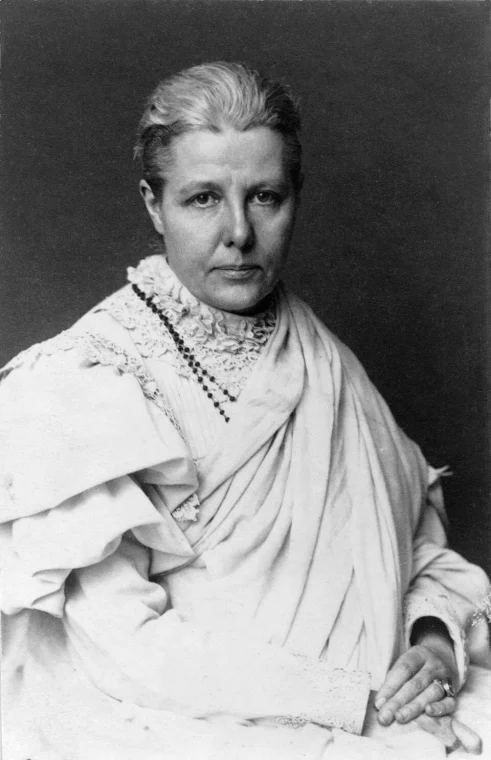
Annie BesantSource portrait · Unknown authorUnknown authorWikimedia Commons · Public domainResized and converted; display may crop to fit.

The person behind the words

Life & biography

Annie Besant was a British writer and activist whose work ranged from socialism and women's rights to Theosophy and Indian Home Rule. She became the first woman president of the Indian National Congress in 1917.

Her books and lectures discuss religious philosophy, education and social change. The Changing World records her own lectures and arguments within the Theosophical movement.

Her British origins and Indian political involvement are both part of her biography. Metaphysical claims in her lectures should remain attributed beliefs rather than be presented as scientific findings.

Read further

Sources & references

Compare original references where historical accounts differ.

Keep exploring

Quotations to explore

Search this collection

In the Art section of The Changing World, Besant argues for beautiful towns and public access to art; the complete sentence is restored from the full source.

Not rated yet · 0 ratings

Besant reflects on how much wisdom and insight people might have gained from the preceding two thousand years.

Not rated yet · 0 ratings

Besant presents her view of health while discussing medicine, poisons, and bodily well-being. This is her historical opinion in a theosophical lecture, not present-day medical guidance or a verified treatment claim.

Not rated yet · 0 ratings

Besant criticizes what she sees as science’s limitations in explaining new psychological phenomena.

Not rated yet · 0 ratings

Annie Besant discusses the limits of scientific observation as phenomena become too minute to observe directly.

Not rated yet · 0 ratings

Besant argues about the relationship between social unity, self-sacrifice, and moral values associated with religion.

Not rated yet · 0 ratings

Besant considers the role of conscience in civic life and why it must be educated.

Not rated yet · 0 ratings

Annie Besant is discussing moral education and the development of children’s conscience and reasoning.

Not rated yet · 0 ratings

Besant considers changing ideas of God and distinguishes external arguments from spiritual experience within the person.

Not rated yet · 0 ratings

While discussing criticism of traditional religious documents, Besant comments on the emergence of thought and criticism itself.

Not rated yet · 0 ratings

Besant describes how historical criticism affects religious traditions and questions a view of religion based only on texts and institutional authority.

Not rated yet · 0 ratings

Annie Besant discusses forces affecting religion and changing thought in her lecture.

Not rated yet · 0 ratings

Besant asks her audience to consider the signs of change visible in the society and ideas of her time.

Not rated yet · 0 ratings

The Changing World, Lecture I: this contrast of slow evolution and racial transition belongs to Besant's historical Theosophical worldview.

Not rated yet · 0 ratings

The Changing World, Lecture I: Besant uses waves as a metaphor in her historical Theosophical account of races and evolution, not a modern scientific classification.

Not rated yet · 0 ratings

Annie Besant opens her lecture on change in religion, science, and art with an image of waves on the shore.

Not rated yet · 0 ratings

Our other brands

Add to a collection

Your collections are private. You can save a quote without creating a collection.

Create a private collection

Continue?
