Aristotle was an ancient Greek philosopher and polymath whose writings covered fields including philosophy, natural sciences, politics, and the arts. He founded the Peripatetic school at the Lyceum in Athens, and his work continues to be studied in philosophical discussion.
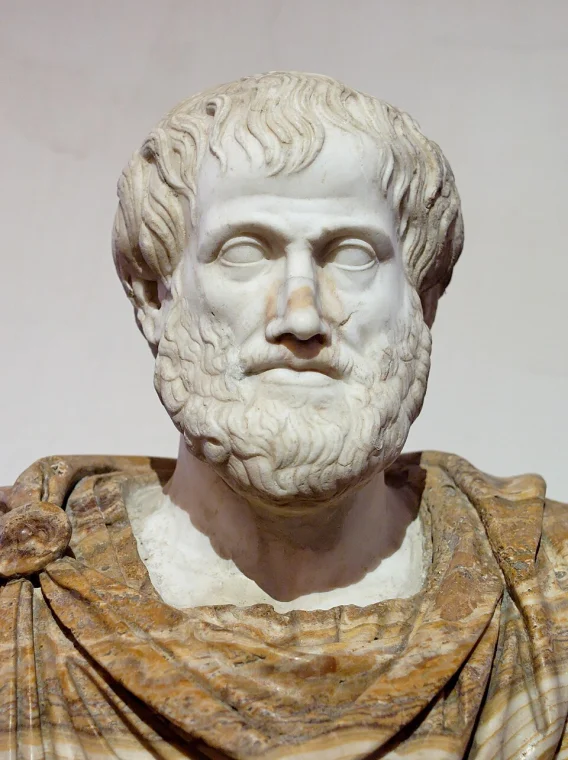
AristotleSource portrait · After LysipposWikimedia Commons · Public domainResized and converted; display may crop to fit.
The person behind the words
Life & biography
Aristotle was an ancient Greek philosopher and polymath. His writings addressed natural sciences, philosophy, linguistics, economics, politics, psychology, and the arts. He joined Plato’s Academy in Athens at about eighteen and remained there until around 347 BC. In 343 BC, at the request of Philip II of Macedon, he began tutoring Philip’s son, Alexander.
Aristotle later established a library at the Lyceum in Athens and founded the Peripatetic school. Only about a third of his original output is said to have survived, and the supplied biography notes that his surviving works were not intended for publication. His methods and writings influenced scholarship across later periods and remain subjects of discussion.
Aristotle’s ethical argument in the translated Nicomachean Ethics; the introductory essay and editorial notes are excluded. English wording retained from the cited published translation by D. P. Chase. Hindi is a new editorial translation from that English edition, not directly from the ancient original language.
Aristotle’s ethical argument in the translated Nicomachean Ethics; the introductory essay and editorial notes are excluded. English wording retained from the cited published translation by D. P. Chase. Hindi is a new editorial translation from that English edition, not directly from the ancient original language.
Aristotle’s ethical argument in the translated Nicomachean Ethics; the introductory essay and editorial notes are excluded. English wording retained from the cited published translation by D. P. Chase. Hindi is a new editorial translation from that English edition, not directly from the ancient original language.
Aristotle’s ethical argument in the translated Nicomachean Ethics; the introductory essay and editorial notes are excluded. English wording retained from the cited published translation by D. P. Chase. Hindi is a new editorial translation from that English edition, not directly from the ancient original language.
Aristotle’s ethical argument in the translated Nicomachean Ethics; the introductory essay and editorial notes are excluded. English wording retained from the cited published translation by D. P. Chase. Hindi is a new editorial translation from that English edition, not directly from the ancient original language.
Aristotle’s ethical argument in the translated Nicomachean Ethics; the introductory essay and editorial notes are excluded. English wording retained from the cited published translation by D. P. Chase. Hindi is a new editorial translation from that English edition, not directly from the ancient original language.
Aristotle’s ethical argument in the translated Nicomachean Ethics; the introductory essay and editorial notes are excluded. English wording retained from the cited published translation by D. P. Chase. Hindi is a new editorial translation from that English edition, not directly from the ancient original language.
Aristotle’s ethical argument in the translated Nicomachean Ethics; the introductory essay and editorial notes are excluded. English wording retained from the cited published translation by D. P. Chase. Hindi is a new editorial translation from that English edition, not directly from the ancient original language.
Aristotle’s ethical argument in the translated Nicomachean Ethics; the introductory essay and editorial notes are excluded. English wording retained from the cited published translation by D. P. Chase. Hindi is a new editorial translation from that English edition, not directly from the ancient original language.
Aristotle’s ethical argument in the translated Nicomachean Ethics; the introductory essay and editorial notes are excluded. English wording retained from the cited published translation by D. P. Chase. Hindi is a new editorial translation from that English edition, not directly from the ancient original language.