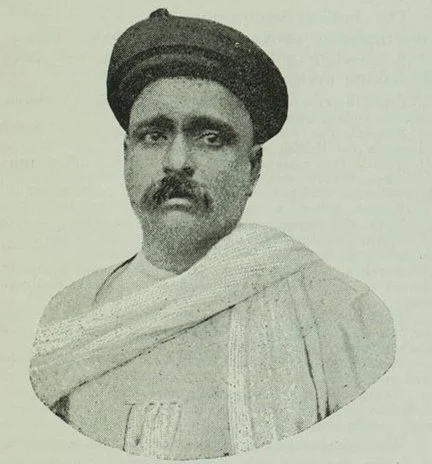
Bal Gangadhar Tilak was an Indian nationalist and advocate of self-rule. Known as Lokmanya, he was associated with the Lal Bal Pal group and helped make political participation a broader public concern.
Explore ideasKnowledge · Independence · Rational Thought
BT
Bal Gangadhar TilakPhotograph · Unknown authorUnknown authorWikimedia Commons · Public domainResized and converted; display may crop to fit.
The person behind the words
Life & biography
Bal Gangadhar Tilak was an Indian nationalist and advocate of self-rule. Known as Lokmanya, he was associated with the Lal Bal Pal group and helped make political participation a broader public concern.
Alongside his political work, he wrote on scripture and ancient chronology. Orion, or Researches into the Antiquity of the Vedas sets out his historical and astronomical interpretation of Vedic material.
His scholarly arguments should be distinguished from modern consensus and from the Sanskrit passages he cites. An English statement of his own argument is not the original wording of an ancient scripture.
From Tilak's historical argument in The Orion, comparing ancient texts and astronomical calendars. This records his scholarly hypothesis, not a statement of present-day scientific consensus.
From Tilak's historical argument in The Orion, comparing ancient texts and astronomical calendars. This records his scholarly hypothesis, not a statement of present-day scientific consensus.
From Tilak's historical argument in The Orion, comparing ancient texts and astronomical calendars. This records his scholarly hypothesis, not a statement of present-day scientific consensus.
From Tilak's historical argument in The Orion, comparing ancient texts and astronomical calendars. This records his scholarly hypothesis, not a statement of present-day scientific consensus.
From Tilak's historical argument in The Orion, comparing ancient texts and astronomical calendars. This records his scholarly hypothesis, not a statement of present-day scientific consensus.
From Tilak's historical argument in The Orion, comparing ancient texts and astronomical calendars. This records his scholarly hypothesis, not a statement of present-day scientific consensus.
From Tilak's historical argument in The Orion, comparing ancient texts and astronomical calendars. This records his scholarly hypothesis, not a statement of present-day scientific consensus.
From Tilak's historical argument in The Orion, comparing ancient texts and astronomical calendars. This records his scholarly hypothesis, not a statement of present-day scientific consensus.