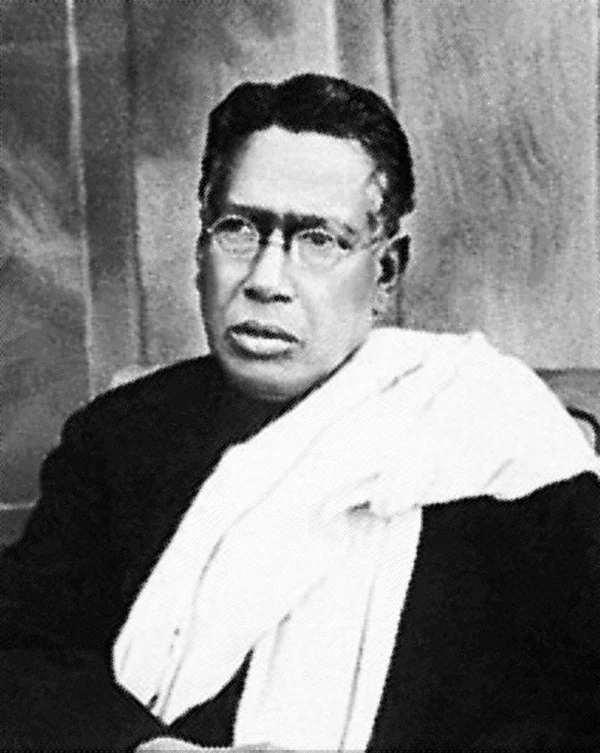
Bipin Chandra Pal was an Indian nationalist, writer and public speaker associated with the Lal Bal Pal trio. He supported the Swadeshi movement and opposed the colonial partition of Bengal.
Explore ideasRational Thought · Knowledge · Independence
BP
Bipin Chandra PalSource portrait · UnknownWikimedia Commons · Public domainResized and converted; display may crop to fit.
The person behind the words
Life & biography
Bipin Chandra Pal was an Indian nationalist, writer and public speaker associated with the Lal Bal Pal trio. He supported the Swadeshi movement and opposed the colonial partition of Bengal.
The Soul of India develops his account of Indian culture and national life. His political essays connect questions of collective identity with education, religion and self-rule.
These texts express Pal's historical interpretation. Their sweeping cultural claims should be attributed to his argument and read in the circumstances of the nationalist movement.
Bipin Chandra Pal writes in The Soul of India. This passage belongs to the work's historical discussion; it should be read in that context rather than as a description of present-day society.
Bipin Chandra Pal writes in The Soul of India. This passage belongs to the work's historical discussion; it should be read in that context rather than as a description of present-day society.
Bipin Chandra Pal writes in The Soul of India. This passage belongs to the work's historical discussion; it should be read in that context rather than as a description of present-day society.
Bipin Chandra Pal writes in The Soul of India. This passage belongs to the work's historical discussion; it should be read in that context rather than as a description of present-day society.
Bipin Chandra Pal writes in The Soul of India. This passage belongs to the work's historical discussion; it should be read in that context rather than as a description of present-day society.
Bipin Chandra Pal writes in The Soul of India. This passage belongs to the work's historical discussion; it should be read in that context rather than as a description of present-day society.