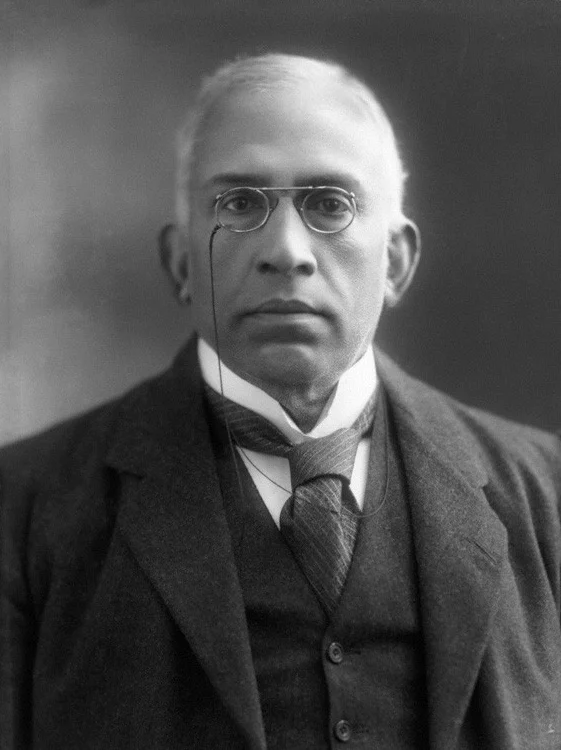
C. Sankaran Nair was known for work as advocate, politician, judge. His career combined legal practice, judicial service and involvement in public affairs under British rule.
C. Sankaran NairSource portrait · Bassano LtdWikimedia Commons · Public domainResized and converted; display may crop to fit.
The person behind the words
Life & biography
C. Sankaran Nair was known for work as advocate, politician, judge. His career combined legal practice, judicial service and involvement in public affairs under British rule.
C. Sankaran Nair was born on 11 July 1857. C. Sankaran Nair died on 24 April 1934.
Biographical citizenship or historical nationality records: British Raj.
In his criticism of boycotting legislative councils, Nair points to England’s parliamentary history as an argument for institutional political struggle.
C. Sankaran Nair. Discussing promises about the timing of Swaraj, Nair argues that political plans require a reasonable basis for believing their conditions can be met. The statement belongs to his critique of campaign promises in 1922.
C. Sankaran Nair. Nair conditionally allows non-co-operation after constitutional means have failed while criticizing Gandhi's contemporary campaign. Keeping the condition is essential to the meaning of his argument.
C. Sankaran Nair. In his preface, Nair argues that caste hierarchy conflicts with non-injury. This is his criticism of the caste system within his larger disagreement with Gandhi's political and social positions.
C. Sankaran Nair. Nair describes representative government as an aim shared by advocates of Home Rule. The line concerns political representation in the colonial-era debate.
C. Sankaran Nair. At the beginning of his discussion of Swaraj, Nair states the aspiration to political self-government. The quotation is his own introductory statement, not one of Gandhi's passages reproduced later in the book.