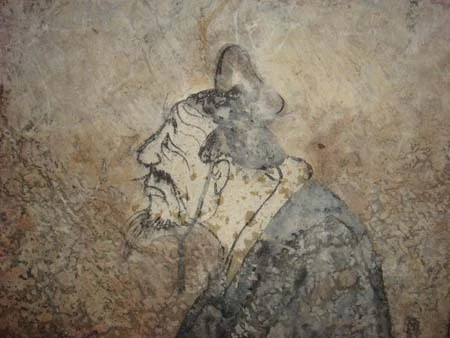
Confucius was a Chinese philosopher of the Spring and Autumn period whose teachings emphasized personal and governmental morality, harmonious relationships, and leadership by virtue. His aphorisms were compiled in the Analects years after his death.
ConfuciusSource portrait · Anonymous Chinese painter of the Western Han periodWikimedia Commons · Public domainResized and converted; display may crop to fit.
The person behind the words
Life & biography
Confucius, born Kong Qiu, was a Chinese philosopher of the Spring and Autumn period. His teachings, later called Confucianism, emphasized personal and governmental morality, harmonious social relationships, righteousness, kindness, sincerity, and a ruler’s responsibility to lead by virtue. He also advocated filial piety and regarded a strong family unit as a foundation for ideal government.
The source describes him as a transmitter of earlier values and notes that ideas associated with him gained prominence in later periods, including under the Han dynasty. Confucius is traditionally credited with authoring or editing ancient texts, but modern scholars exercise caution about assigning specific works or ideas to him. His teachings were compiled in the Analects years after his death.