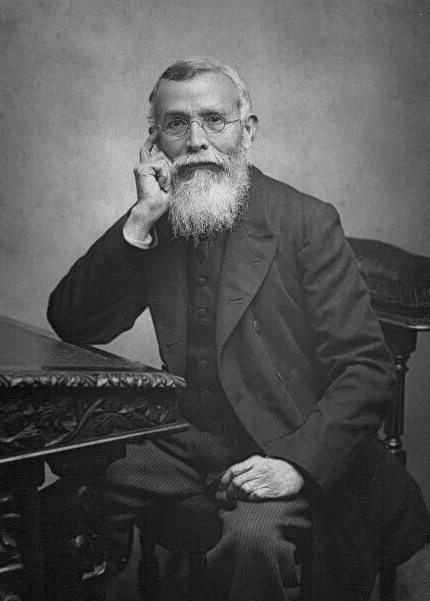
Dadabhai Naoroji was a political leader and writer active in Indian and British public life. He helped establish the Indian National Congress and served as its president on three occasions.
Dadabhai NaorojiSource portrait · R.M. Richardson & CoWikimedia Commons · Public domainResized and converted; display may crop to fit.
The person behind the words
Life & biography
Dadabhai Naoroji was a political leader and writer active in Indian and British public life. He helped establish the Indian National Congress and served as its president on three occasions.
He represented Finsbury Central in the British House of Commons from 1892 to 1895. His speeches and economic arguments addressed India's poverty, public administration and the movement of wealth under colonial rule.
Collections of his speeches include historical data and political advocacy. Individual passages should retain their dates and subject rather than be presented as timeless statistical claims.
Dadabhai Naoroji writes in Dadabhai Naoroji’s Speeches. This passage belongs to the work's historical discussion; it should be read in that context rather than as a description of present-day society.
Dadabhai Naoroji writes in Dadabhai Naoroji’s Speeches. This passage belongs to the work's historical discussion; it should be read in that context rather than as a description of present-day society.
Dadabhai Naoroji writes in Dadabhai Naoroji’s Speeches. This passage belongs to the work's historical discussion; it should be read in that context rather than as a description of present-day society.
Dadabhai Naoroji writes in Dadabhai Naoroji’s Speeches. This passage belongs to the work's historical discussion; it should be read in that context rather than as a description of present-day society.
Dadabhai Naoroji writes in Dadabhai Naoroji’s Speeches. This passage belongs to the work's historical discussion; it should be read in that context rather than as a description of present-day society.
In his 1886 presidential address in Calcutta, Naoroji distinguished the role of a national congress from that of groups addressing reforms specific to their communities.
In his 1886 presidential address to the Calcutta Congress, Naoroji argued that social reform should be discussed in an appropriate forum and at an appropriate time.