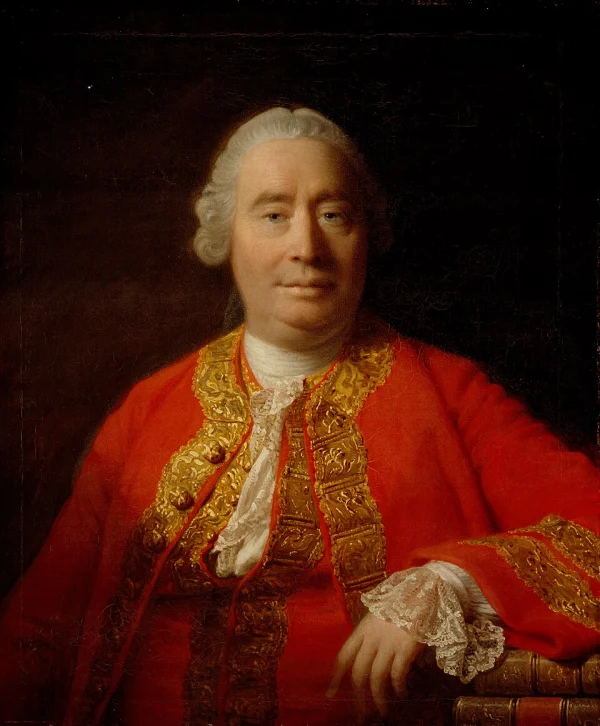
David Hume (1711–1776) was a Scottish philosopher, historian, economist, and essayist. His work explored empiricism, skepticism, human nature, and ethics.
David HumeSource portrait · Allan RamsayWikimedia Commons · Public domainResized and converted; display may crop to fit.
The person behind the words
Life & biography
David Hume was born David Home on 7 May 1711 in Scotland and died on 25 August 1776. He worked as a philosopher, historian, economist, and essayist. His philosophical work, beginning with A Treatise of Human Nature (1739–40), sought a naturalistic account of human nature and examined how ideas arise from impressions and experience.
Hume argued that causal inference and induction rest on custom and habit, and that passions play a central role in human behavior. He developed views on ethics, personal identity, free will, and religion. During his lifetime he was also known for his History of England, which became a bestseller; his influence later extended across several areas of philosophy and related fields.
An Enquiry Concerning Human Understanding — authorial reflection or argument; topic: experience and causal arguments. The English text follows this source edition; Hindi is a QuoteKosh editorial translation.
An Enquiry Concerning Human Understanding — authorial reflection or argument; topic: testimony and experience. The English text follows this source edition; Hindi is a QuoteKosh editorial translation.
An Enquiry Concerning Human Understanding — authorial reflection or argument; topic: credulity and bold claims. The English text follows this source edition; Hindi is a QuoteKosh editorial translation.
An Enquiry Concerning Human Understanding — authorial reflection or argument; topic: everyday expectations of others. The English text follows this source edition; Hindi is a QuoteKosh editorial translation.
An Enquiry Concerning Human Understanding — authorial reflection or argument; topic: social interdependence. The English text follows this source edition; Hindi is a QuoteKosh editorial translation.
An Enquiry Concerning Human Understanding — authorial reflection or argument; topic: motives in human action. The English text follows this source edition; Hindi is a QuoteKosh editorial translation.
An Enquiry Concerning Human Understanding — authorial reflection or argument; topic: how custom takes hold. The English text follows this source edition; Hindi is a QuoteKosh editorial translation.
An Enquiry Concerning Human Understanding — authorial reflection or argument; topic: scepticism and love of truth. The English text follows this source edition; Hindi is a QuoteKosh editorial translation.
An Enquiry Concerning Human Understanding — authorial reflection or argument; topic: the materials of thought. The English text follows this source edition; Hindi is a QuoteKosh editorial translation.
An Enquiry Concerning Human Understanding — authorial reflection or argument; topic: depth with clarity. The English text follows this source edition; Hindi is a QuoteKosh editorial translation.
In A Treatise of Human Nature, Hume challenges the claim that describing perceptions as actions of a substance supports the doctrine of the soul’s immateriality.
In A Treatise of Human Nature, Hume contrasts the practical dangers he associates with religious errors with the comparatively limited effects he attributes to errors in philosophy.