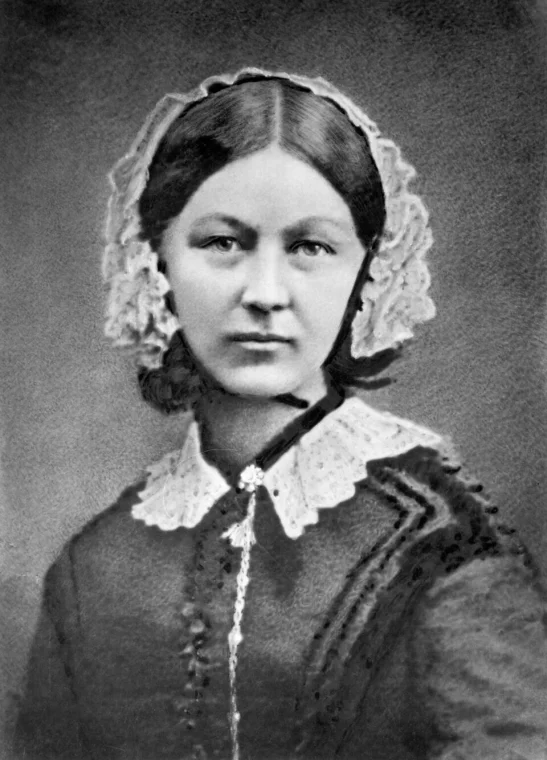
Florence Nightingale (1820–1910) was an English social reformer, statistician and founder of modern nursing. Her work during and after the Crimean War helped professionalise nursing.
Florence NightingaleSource portrait · Henry Hering (1814-1893)Wikimedia Commons · Public domainResized and converted; display may crop to fit.
The person behind the words
Life & biography
Florence Nightingale was an English social reformer, statistician and founder of modern nursing. During the Crimean War, she managed and trained nurses caring for wounded soldiers in Constantinople, improving hygiene and living conditions. The supplied source also notes that commentators have disputed the extent of how her wartime achievements were presented, while recognising the importance of her later work in professionalising nursing.
In 1860, she established a nursing school at St Thomas’ Hospital in London, described in the source as the first secular nursing school in the world. Nightingale also advocated healthcare and social reforms and used graphical methods, including the polar area diagram, to present statistical analysis. She wrote extensively on medical knowledge, religion and mysticism.
Notes on Nursing: What It Is, and What It Is Not — authorial reflection or argument; topic: looking beyond the moment. The English text follows this source edition; Hindi is a QuoteKosh editorial translation.
Notes on Nursing: What It Is, and What It Is Not — authorial reflection or argument; topic: truth needs observation and memory. The English text follows this source edition; Hindi is a QuoteKosh editorial translation.
Notes on Nursing: What It Is, and What It Is Not — authorial reflection or argument; topic: observation as a professional duty. The English text follows this source edition; Hindi is a QuoteKosh editorial translation.
Notes on Nursing: What It Is, and What It Is Not — authorial reflection or argument; topic: devotion and careful observation. The English text follows this source edition; Hindi is a QuoteKosh editorial translation.
Notes on Nursing: What It Is, and What It Is Not — authorial reflection or argument; topic: asking enough to understand. The English text follows this source edition; Hindi is a QuoteKosh editorial translation.
Notes on Nursing: What It Is, and What It Is Not — authorial reflection or argument; topic: precise questions and truthful answers. The English text follows this source edition; Hindi is a QuoteKosh editorial translation.
Notes on Nursing: What It Is, and What It Is Not — authorial reflection or argument; topic: remembering another's experience. The English text follows this source edition; Hindi is a QuoteKosh editorial translation.
Notes on Nursing: What It Is, and What It Is Not — authorial reflection or argument; topic: including people in life's activity. The English text follows this source edition; Hindi is a QuoteKosh editorial translation.
Notes on Nursing: What It Is, and What It Is Not — authorial reflection or argument; topic: a considerate visit. The English text follows this source edition; Hindi is a QuoteKosh editorial translation.
Notes on Nursing: What It Is, and What It Is Not — authorial reflection or argument; topic: advice without listening. The English text follows this source edition; Hindi is a QuoteKosh editorial translation.
In Section XIII of Notes on Nursing, Nightingale argues that nursing observation should distinguish signs of improvement from deterioration and recognize evidence of neglect.
In Notes on Nursing (1860), Nightingale argues that institutional conditions can prevent effective nursing, which must account for the arrangements that make care possible.