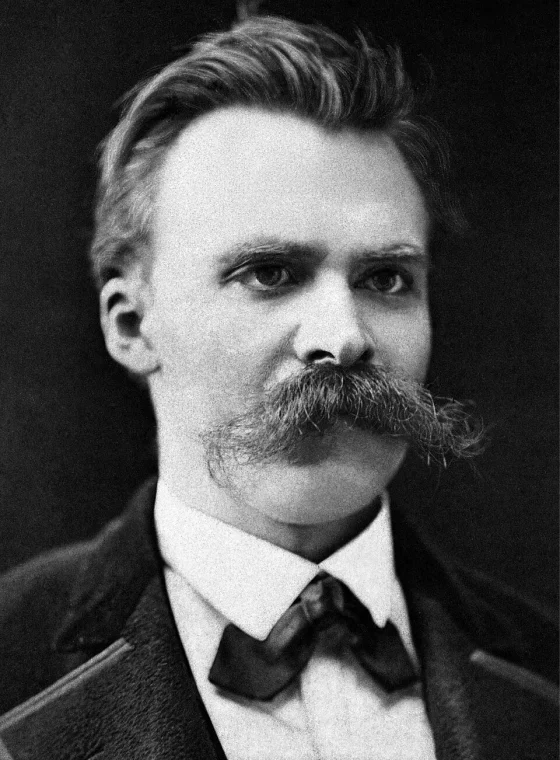
German philosopher and writer; classical philologist
Friedrich Nietzsche (1844–1900) was a German philosopher and writer who began his career as a classical philologist. His work included philosophical essays, poetry, and cultural criticism.
Friedrich NietzscheSource portrait · Friedrich Hermann HartmannWikimedia Commons · Public domainResized and converted; display may crop to fit.
The person behind the words
Life & biography
Friedrich Wilhelm Nietzsche was born on 15 October 1844. He began his career as a classical philologist and became Professor of Classical Philology at the University of Basel in 1869, at age 24. Health problems led him to resign in 1879; he thereafter worked as an independent writer, moving among Switzerland, Italy, and southern France. His writing ranged across philosophy, poetry, and cultural criticism.
Nietzsche’s work addressed topics including morality, religion, culture, tragedy, and science, and developed concepts such as perspectivism, the Übermensch, and eternal return. In 1889 he suffered a neurological collapse and lived under family care until his death on 25 August 1900. His sister edited unpublished manuscripts after his death in ways that distorted some of his stated views, including his opposition to antisemitism and nationalism. Later scholars produced corrected editions.