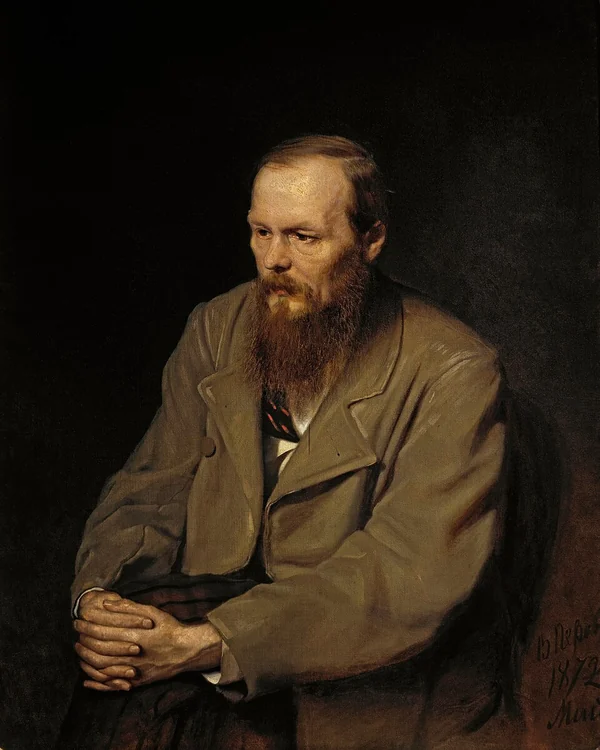
Fyodor DostoevskyHistorical painting · Vasily PerovWikimedia Commons · Public domainResized and converted; display may crop to fit.
The person behind the words
Life & biography
Dostoevsky's experiences of imprisonment and exile informed his literary outlook. Crime and Punishment and The Brothers Karamazov examine responsibility, belief and moral choice. His characters often confront competing ideas through intense personal and social crises.
From Dostoevsky’s Pushkin speech/essay in A Writer’s Diary, 1880, Chapter Two, in its Russian text. These are the author’s literary and historical interpretations, not a current factual consensus.
From Dostoevsky’s Pushkin speech/essay in A Writer’s Diary, 1880, Chapter Two, in its Russian text. These are the author’s literary and historical interpretations, not a current factual consensus.
From Dostoevsky’s Pushkin speech/essay in A Writer’s Diary, 1880, Chapter Two, in its Russian text. These are the author’s literary and historical interpretations, not a current factual consensus.
From Dostoevsky’s Pushkin speech/essay in A Writer’s Diary, 1880, Chapter Two, in its Russian text. These are the author’s literary and historical interpretations, not a current factual consensus.
From Dostoevsky’s Pushkin speech/essay in A Writer’s Diary, 1880, Chapter Two, in its Russian text. These are the author’s literary and historical interpretations, not a current factual consensus.
From Dostoevsky’s Pushkin speech/essay in A Writer’s Diary, 1880, Chapter Two, in its Russian text. These are the author’s literary and historical interpretations, not a current factual consensus.