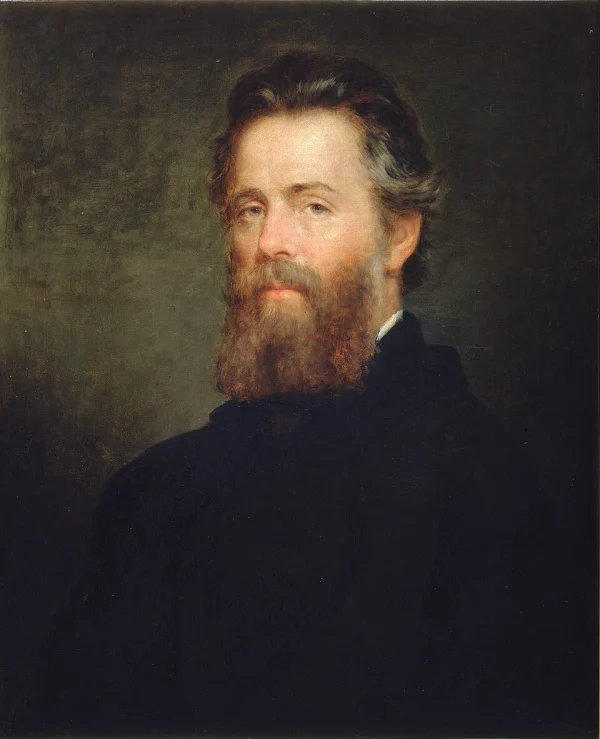
Herman Melville (1819–1891) was an American writer known for works including Typee, Moby-Dick and Billy Budd. He also wrote poetry, including Battle-Pieces and Aspects of the War and Clarel.
Herman MelvilleSource portrait · Joseph Oriel EatonWikimedia Commons · Public domainResized and converted; display may crop to fit.
The person behind the words
Life & biography
Herman Melville, born Melvill, was an American writer of the American Renaissance period. His early books Typee and Omoo drew on his experiences in the islands, while Moby-Dick (1851) became one of his best-known works. He also published Redburn, White-Jacket and the novel Pierre: or, The Ambiguities, and wrote short fiction including “Benito Cereno” and “Bartleby, the Scrivener.”
Melville later turned much of his creative attention to poetry. Battle-Pieces and Aspects of the War (1866) reflected on moral questions of the American Civil War, and Clarel was published in 1876. He retired in 1886 after working as a United States customs inspector. Billy Budd was unfinished at his death and published posthumously in 1924. The supplied biography says he was little known publicly when he died; a revival began in 1919.
Ishmael’s fictional narration in Herman Melville’s Moby-Dick; the views and imagery belong to the novel’s narrator rather than an autobiographical statement by Melville. English wording retained from the cited authored text; Hindi is a new editorial translation.
Ishmael’s fictional narration in Herman Melville’s Moby-Dick; the views and imagery belong to the novel’s narrator rather than an autobiographical statement by Melville. In The Squeeze of the Hand, squeezing case refers to working lumps of spermaceti; it is a whaling-work image. English wording retained from the cited authored text; Hindi is a new editorial translation.
Ishmael’s fictional narration in Herman Melville’s Moby-Dick; the views and imagery belong to the novel’s narrator rather than an autobiographical statement by Melville. English wording retained from the cited authored text; Hindi is a new editorial translation.
Ishmael’s fictional narration in Herman Melville’s Moby-Dick; the views and imagery belong to the novel’s narrator rather than an autobiographical statement by Melville. English wording retained from the cited authored text; Hindi is a new editorial translation.
Ishmael’s fictional narration in Herman Melville’s Moby-Dick; the views and imagery belong to the novel’s narrator rather than an autobiographical statement by Melville. English wording retained from the cited authored text; Hindi is a new editorial translation.
Ishmael’s fictional narration in Herman Melville’s Moby-Dick; the views and imagery belong to the novel’s narrator rather than an autobiographical statement by Melville. English wording retained from the cited authored text; Hindi is a new editorial translation.
Ishmael’s fictional narration in Herman Melville’s Moby-Dick; the views and imagery belong to the novel’s narrator rather than an autobiographical statement by Melville. English wording retained from the cited authored text; Hindi is a new editorial translation.
Ishmael’s fictional narration in Herman Melville’s Moby-Dick; the views and imagery belong to the novel’s narrator rather than an autobiographical statement by Melville. English wording retained from the cited authored text; Hindi is a new editorial translation.
Ishmael’s fictional narration in Herman Melville’s Moby-Dick; the views and imagery belong to the novel’s narrator rather than an autobiographical statement by Melville. English wording retained from the cited authored text; Hindi is a new editorial translation.
Ishmael’s fictional narration in Herman Melville’s Moby-Dick; the views and imagery belong to the novel’s narrator rather than an autobiographical statement by Melville. English wording retained from the cited authored text; Hindi is a new editorial translation.