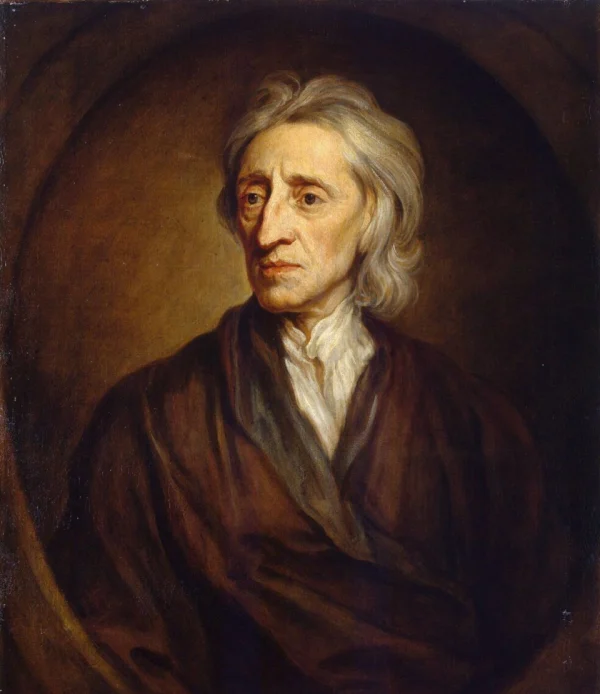
John Locke was an English philosopher and physician whose writings shaped empiricism, political philosophy, and social contract theory. His influential works include *A Letter Concerning Toleration*, *Two Treatises of Government*, and *An Essay Concerning Human Understanding*.
John LockeSource portrait · Godfrey KnellerWikimedia Commons · Public domainResized and converted; display may crop to fit.
The person behind the words
Life & biography
John Locke (29 August 1632 – 28 October 1704) was an English philosopher and physician. He studied and later taught at Christ Church, Oxford, pursuing medical and scientific interests. He became a Fellow of the Royal Society in 1668 and held government posts after becoming associated with Lord Shaftesbury.
Locke’s major works include *A Letter Concerning Toleration*, *Two Treatises of Government*, and *An Essay Concerning Human Understanding*. His writing contributed to empiricism, epistemology, social contract theory, and liberal political thought. The source describes his influence on later philosophers and on ideas reflected in the United States Declaration of Independence.
An Essay Concerning Humane Understanding, Volume 1 MDCXC, Based on the 2nd Edition, Books 1 and 2 — authorial reflection or argument; topic: the making of complex ideas. The English text follows this source edition; Hindi is a QuoteKosh editorial translation.
An Essay Concerning Humane Understanding, Volume 1 MDCXC, Based on the 2nd Edition, Books 1 and 2 — authorial reflection or argument; topic: different effects of despair. The English text follows this source edition; Hindi is a QuoteKosh editorial translation.
An Essay Concerning Humane Understanding, Volume 1 MDCXC, Based on the 2nd Edition, Books 1 and 2 — authorial reflection or argument; topic: an account of sorrow. The English text follows this source edition; Hindi is a QuoteKosh editorial translation.
An Essay Concerning Humane Understanding, Volume 1 MDCXC, Based on the 2nd Edition, Books 1 and 2 — authorial reflection or argument; topic: love and another's welfare. The English text follows this source edition; Hindi is a QuoteKosh editorial translation.
An Essay Concerning Humane Understanding, Volume 1 MDCXC, Based on the 2nd Edition, Books 1 and 2 — authorial reflection or argument; topic: reflection on thinking. The English text follows this source edition; Hindi is a QuoteKosh editorial translation.
An Essay Concerning Humane Understanding, Volume 1 MDCXC, Based on the 2nd Edition, Books 1 and 2 — authorial reflection or argument; topic: memory ready for use. The English text follows this source edition; Hindi is a QuoteKosh editorial translation.
An Essay Concerning Humane Understanding, Volume 1 MDCXC, Based on the 2nd Edition, Books 1 and 2 — authorial reflection or argument; topic: avoiding opposite extremes. The English text follows this source edition; Hindi is a QuoteKosh editorial translation.
An Essay Concerning Humane Understanding, Volume 1 MDCXC, Based on the 2nd Edition, Books 1 and 2 — authorial reflection or argument; topic: truth and conscious thought. The English text follows this source edition; Hindi is a QuoteKosh editorial translation.
An Essay Concerning Humane Understanding, Volume 1 MDCXC, Based on the 2nd Edition, Books 1 and 2 — authorial reflection or argument; topic: early knowledge and experience. The English text follows this source edition; Hindi is a QuoteKosh editorial translation.
An Essay Concerning Humane Understanding, Volume 1 MDCXC, Based on the 2nd Edition, Books 1 and 2 — authorial reflection or argument; topic: the pleasure of discovery. The English text follows this source edition; Hindi is a QuoteKosh editorial translation.
In this passage from An Essay Concerning Humane Understanding, Locke challenges accepting opinions merely because respected or numerous people hold them.
In An Essay Concerning Humane Understanding, Locke argues that people's actions are stronger evidence of their thoughts than supposed silent assent to principles they may deny in practice.
In this passage of An Essay Concerning Humane Understanding, Locke argues that claims about another person’s thinking cannot exceed what experience makes knowable.