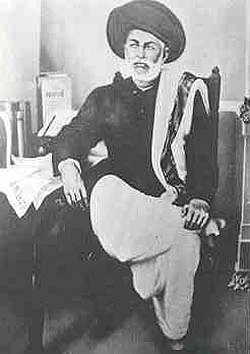
Social reformer, education advocate and Marathi writer
Jyotirao Phule was a social reformer and writer from Maharashtra whose work challenged caste exclusion and unequal access to education. He worked with Savitribai Phule to expand educational opportunities.
Jyotirao PhuleSource portrait · Unknown authorUnknown authorWikimedia Commons · Public domainResized and converted; display may crop to fit.
The person behind the words
Life & biography
Jyotirao Phule was a social reformer and writer from Maharashtra whose work challenged caste exclusion and unequal access to education. He worked with Savitribai Phule to expand educational opportunities.
His Marathi writings include Shetkaryacha Asud, a critique of the circumstances of cultivators and the social institutions affecting them. Original Marathi wording is distinct from later Hindi and English translations.
His public work and writing are central to the history of anti-caste reform in India. Quotations should retain the language and historical circumstances of the original passage.
In Shetkaryacha Asud, Phule criticizes how clerks can alter farmers' testimony before it reaches a deciding official. The passage is his historical polemical account, not a general claim about a community today.
In Shetkaryacha Asud, Phule criticizes how clerks can alter farmers' testimony before it reaches a deciding official. The passage is his historical polemical account, not a general claim about a community today.
In Shetkaryacha Asud, Phule criticizes how clerks can alter farmers' testimony before it reaches a deciding official. The passage is his historical polemical account, not a general claim about a community today.
Jyotirao Phule criticizes government officials’ indifference to farmers’ conditions and the predominance of Brahmin employees in government departments.
Phule is describing claims made to farmers about a spiritual figure’s supposed ability to know people’s wishes. He concludes that these claims are used to induce farmers to visit and pay.
The passage is part of Phule’s broader account of rituals and payments imposed on farmers. He describes the sequence of a home ceremony and the expenses borne by the household.
Phule extends his criticism beyond annual festivals to eclipses and other auspicious occasions. The sentence portrays the repeated demands on farmers as a cycle of religiously framed extraction.
Here Phule describes the limits of the education available to farmers’ children in Marathi schools and the resulting restriction of their opportunities.