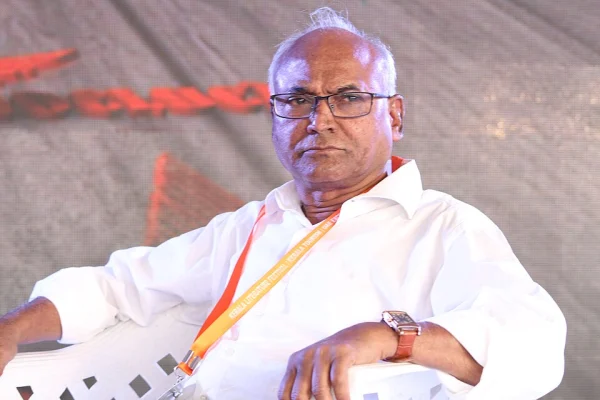
Kancha Ilaiah. In a report about caste discrimination in universities, Ilaiah describes a struggle for intellectual equality. The passage is his assessment of caste and academic institutions, not an independently established generalization. English wording is preserved as printed in the cited source; the language actually spoken is not inferred.
Kancha Ilaiah. In an interview about Maharashtra's beef ban, Ilaiah questions state control over food practices. The quotation records his political position in that debate and does not describe current law. English wording is preserved as printed in the cited source; the language actually spoken is not inferred.
Kancha Ilaiah. Answering a question about reservations, Ilaiah emphasizes English education and intellectual opportunity for Dalit children. This is his conditional argument about educational access, not a measured statistical result. English wording is preserved as printed in the cited source; the language actually spoken is not inferred.
Kancha Ilaiah. Ilaiah proposes an inclusive ceremonial practice as a symbolic response to caste separation. It forms part of his broader discussion of changes in social and religious conduct. English wording is preserved as printed in the cited source; the language actually spoken is not inferred.
Kancha Ilaiah. In an interview discussing caste exclusion, Ilaiah calls for rejecting the stigma assigned to particular occupations and materials. The sentence expresses his argument against caste-based untouchability. English wording is preserved as printed in the cited source; the language actually spoken is not inferred.