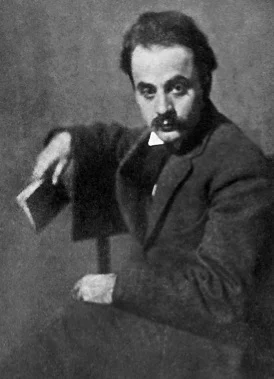
Khalil Gibran (1883–1931) was a Lebanese-American writer, poet and visual artist. He is best known for The Prophet, first published in the United States in 1923.
Khalil GibranSource portrait · Unknown authorUnknown authorWikimedia Commons · Public domainResized and converted; display may crop to fit.
The person behind the words
Life & biography
Born in Bsharri, then in the Ottoman-ruled Mount Lebanon Mutasarrifate, Gibran immigrated with his mother and siblings to the United States in 1895. He studied art in Paris from 1908 to 1910 and settled in New York in 1911. His first book in Arabic appeared in 1905, and his first English book, The Madman, was published in 1918.
Gibran was a writer, poet and visual artist. The Prophet was published in the United States in 1923 and later translated into more than 100 languages. In 1920, he re-founded the Pen League with fellow Mahjari poets. He died in 1931; his body was transferred to his birth village of Bsharri.
The Prophet — poetic passage in its speaker’s voice; topic: words and wordless knowing. The English text follows this source edition; Hindi is a QuoteKosh editorial translation.
The Prophet — poetic passage in its speaker’s voice; topic: the river and the sea. The English text follows this source edition; Hindi is a QuoteKosh editorial translation.
The Prophet — poetic passage in its speaker’s voice; topic: regret and a clouded mind. The English text follows this source edition; Hindi is a QuoteKosh editorial translation.
The Prophet — poetic passage in its speaker’s voice; topic: a firm walk toward a goal. The English text follows this source edition; Hindi is a QuoteKosh editorial translation.
The Prophet — poetic passage in its speaker’s voice; topic: goodness under hunger. The English text follows this source edition; Hindi is a QuoteKosh editorial translation.
The Prophet — poetic passage in its speaker’s voice; topic: speech and understanding. The English text follows this source edition; Hindi is a QuoteKosh editorial translation.
The Prophet — poetic passage in its speaker’s voice; topic: teaching and one's own mind. The English text follows this source edition; Hindi is a QuoteKosh editorial translation.
The Prophet — poetic passage in its speaker’s voice; topic: labour and intimacy with life. The English text follows this source edition; Hindi is a QuoteKosh editorial translation.
The Prophet — poetic passage in its speaker’s voice; topic: giving as participation. The English text follows this source edition; Hindi is a QuoteKosh editorial translation.
The Prophet — poetic passage in its speaker’s voice; topic: love and direction. The English text follows this source edition; Hindi is a QuoteKosh editorial translation.