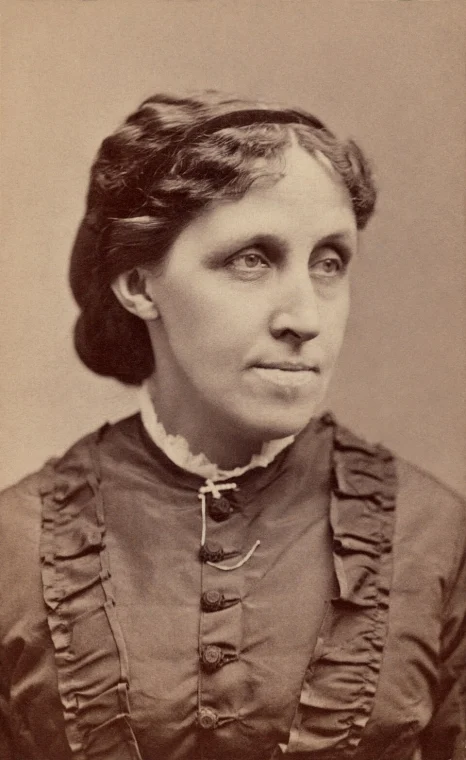
Louisa May Alcott was an American novelist, short story writer, and poet, best known for Little Women and its sequels. She also served as a nurse during the American Civil War.
Louisa May AlcottSource portrait · Adam CuerdenWikimedia Commons · Public domainResized and converted; display may crop to fit.
The person behind the words
Life & biography
Born on November 29, 1832, Louisa May Alcott grew up in New England in a family that faced financial hardship. She began writing early and took on various jobs to help support her family. Her writing achieved critical success in the 1860s, including Hospital Sketches, based on her service as a nurse during the American Civil War.
Alcott wrote Little Women (1868), followed by Good Wives (1869), Little Men (1871), and Jo's Boys (1886). She was an abolitionist and feminist and took part in reform movements, including temperance and women's suffrage. She died in Boston on March 6, 1888.
Little Women; Or, Meg, Jo, Beth, and Amy — fictional narration or character dialogue; topic: preparing for hopes and responsibilities. The English text follows this source edition; Hindi is a QuoteKosh editorial translation.
Little Women; Or, Meg, Jo, Beth, and Amy — fictional narration or character dialogue; topic: patience during awkward adolescence. The English text follows this source edition; Hindi is a QuoteKosh editorial translation.
Little Women; Or, Meg, Jo, Beth, and Amy — fictional narration or character dialogue; topic: respect for speaking from conscience. The English text follows this source edition; Hindi is a QuoteKosh editorial translation.
Little Women; Or, Meg, Jo, Beth, and Amy — fictional narration or character dialogue; topic: amy's resolve to answer kindly. The English text follows this source edition; Hindi is a QuoteKosh editorial translation.
Little Women; Or, Meg, Jo, Beth, and Amy — fictional narration or character dialogue; topic: the small kindnesses one overlooks. The English text follows this source edition; Hindi is a QuoteKosh editorial translation.
Little Women; Or, Meg, Jo, Beth, and Amy — fictional narration or character dialogue; topic: working with someone else in mind. The English text follows this source edition; Hindi is a QuoteKosh editorial translation.
Little Women; Or, Meg, Jo, Beth, and Amy — fictional narration or character dialogue; topic: balancing work and play. The English text follows this source edition; Hindi is a QuoteKosh editorial translation.
Little Women; Or, Meg, Jo, Beth, and Amy — fictional narration or character dialogue; topic: practising the virtues one teaches. The English text follows this source edition; Hindi is a QuoteKosh editorial translation.
Little Women; Or, Meg, Jo, Beth, and Amy — fictional narration or character dialogue; topic: forgiveness and a fresh beginning. The English text follows this source edition; Hindi is a QuoteKosh editorial translation.
Little Women; Or, Meg, Jo, Beth, and Amy — fictional narration or character dialogue; topic: a guide through troubles and mistakes. The English text follows this source edition; Hindi is a QuoteKosh editorial translation.
In Little Women, Chapter XIII, Castles in the Air, Beth replies to Laurie during the group’s conversation about reaching the Celestial City. The image of Christian comes from Bunyan’s Pilgrim’s Progress.