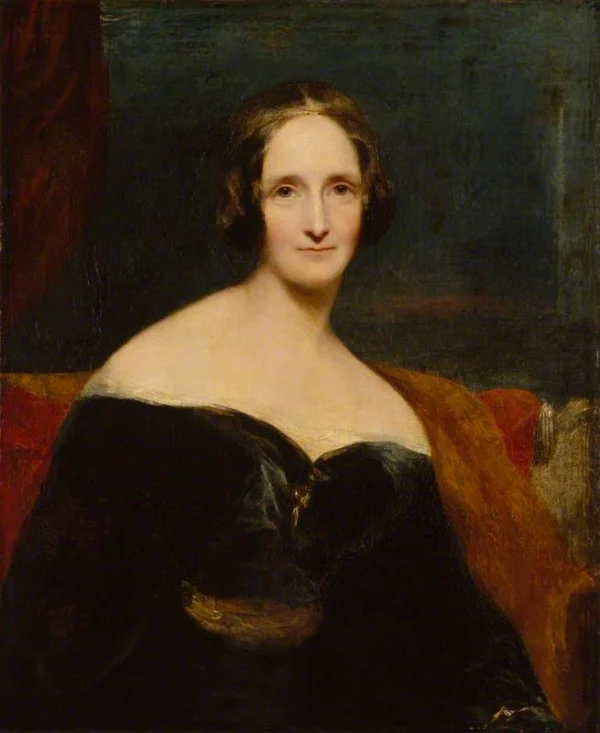
Mary Shelley (1797–1851) was an English novelist best known for Frankenstein; or, The Modern Prometheus (1818), an early example of science fiction. She also wrote several other novels and edited and promoted the work of her husband, Percy Bysshe Shelley.
Mary ShelleySource portrait · Richard RothwellWikimedia Commons · Public domainResized and converted; display may crop to fit.
The person behind the words
Life & biography
Mary Wollstonecraft Shelley (née Godwin) was born on 30 August 1797. Her father, political philosopher William Godwin, raised her and encouraged an informal education. In 1816, while staying near Geneva with Percy Bysshe Shelley, Lord Byron and John William Polidori, she conceived the idea for Frankenstein; or, The Modern Prometheus, published in 1818.
Shelley wrote historical novels including Valperga and Perkin Warbeck, as well as The Last Man, Lodore and Falkner. She also produced travel writing and biographical articles, and edited and promoted her husband’s works. After Percy Shelley drowned in 1822, she returned to England and pursued her career as a professional author while raising their son. She died on 1 February 1851.
Frankenstein; or, The modern Prometheus — fictional narration or character dialogue; topic: courage with responsibility for others. The English text follows this source edition; Hindi is a QuoteKosh editorial translation.
Frankenstein; or, The modern Prometheus — fictional narration or character dialogue; topic: the lasting force of childhood bonds. The English text follows this source edition; Hindi is a QuoteKosh editorial translation.
Frankenstein; or, The modern Prometheus — fictional narration or character dialogue; topic: the shock of sudden loss. The English text follows this source edition; Hindi is a QuoteKosh editorial translation.
Frankenstein; or, The modern Prometheus — fictional narration or character dialogue; topic: attachment to life amid suffering. The English text follows this source edition; Hindi is a QuoteKosh editorial translation.
Frankenstein; or, The modern Prometheus — fictional narration or character dialogue; topic: a listener offers hope. The English text follows this source edition; Hindi is a QuoteKosh editorial translation.
Frankenstein; or, The modern Prometheus — fictional narration or character dialogue; topic: kindness beyond self-interest. The English text follows this source edition; Hindi is a QuoteKosh editorial translation.
Frankenstein; or, The modern Prometheus — fictional narration or character dialogue; topic: the stillness after a crisis. The English text follows this source edition; Hindi is a QuoteKosh editorial translation.
Frankenstein; or, The modern Prometheus — fictional narration or character dialogue; topic: ambition and a peaceful mind. The English text follows this source edition; Hindi is a QuoteKosh editorial translation.
Frankenstein; or, The modern Prometheus — fictional narration or character dialogue; topic: friendship that helps us grow. The English text follows this source edition; Hindi is a QuoteKosh editorial translation.
Frankenstein; or, The modern Prometheus — fictional narration or character dialogue; topic: a friend who can also advise. The English text follows this source edition; Hindi is a QuoteKosh editorial translation.
In Frankenstein, the creature says this to Walton during his final speech, reflecting on how his earlier wonder at nature has given way to remorse and despair.
In Frankenstein, Victor recounts how a lecture rekindles his ambition to pursue science; this is fictional narration, not a factual claim about creating life.
In Frankenstein, the creature appeals to the blind De Lacey for acceptance, describing the prejudice that judges his appearance rather than his intentions.