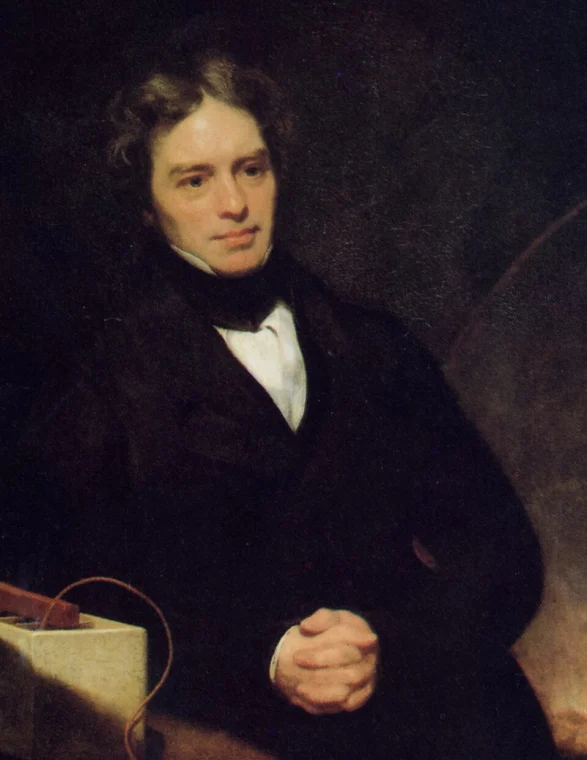
Michael Faraday (1791–1867) was an English chemist and physicist whose work contributed to the study of electromagnetism and electrochemistry. He also helped make scientific ideas accessible through public lectures.
Michael FaradaySource portrait · Thomas PhillipsWikimedia Commons · Public domainResized and converted; display may crop to fit.
The person behind the words
Life & biography
Michael Faraday was an English chemist and physicist. His work established principles underlying electromagnetic induction, diamagnetism, and electrolysis, and helped develop the concept of the electromagnetic field. His electromagnetic rotary devices laid foundations for electric motor technology. In chemistry, he discovered benzene, investigated other compounds, and helped popularize terms including “anode,” “cathode,” “electrode,” and “ion.”
Faraday held the Royal Institution’s lifetime position of Fullerian Professor of Chemistry and contributed to public science through its Friday Evening Discourses and Christmas Lecture Series. He also undertook public-service investigations concerning lighthouses, ship corrosion, industrial pollution, and a colliery explosion. The SI unit of capacitance, the farad, is named after him.