Social reformer, scholar and advocate for women's education
Pandita Ramabai was a scholar and social reformer who worked for women's education and the welfare of widows. Her knowledge of Sanskrit brought her the titles Pandita and Sarasvati.
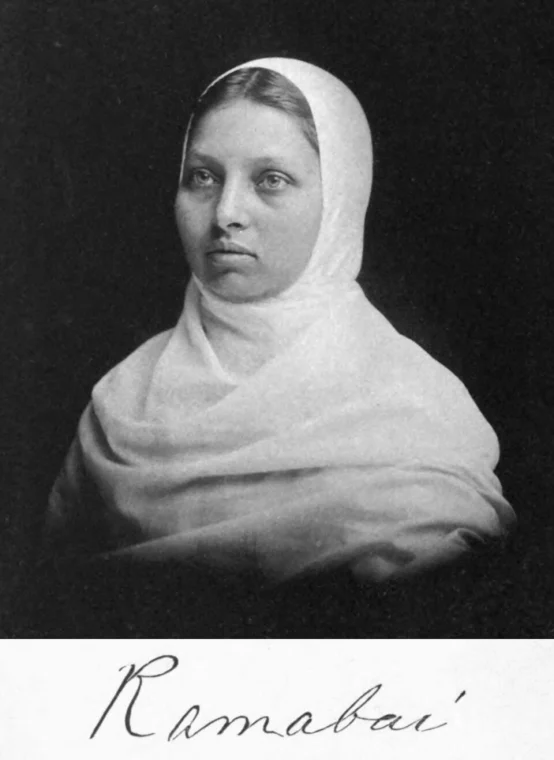
Pandita RamabaiSource portrait · Ramabai Sarasvati, Pandita, 1858-1922Wikimedia Commons · Public domainResized and converted; display may crop to fit.
The person behind the words
Life & biography
Pandita Ramabai was a scholar and social reformer who worked for women's education and the welfare of widows. Her knowledge of Sanskrit brought her the titles Pandita and Sarasvati.
She established Sharada Sadan and later Mukti Mission. In The High-Caste Hindu Woman she examined the restrictions faced by women, including child marriage and widowhood, and argued for practical educational support.
Her writing combines personal observation, social criticism and her Christian convictions. Quotations from religious texts within the book must remain distinct from her own commentary.
Pandita Ramabai writes in The High-caste Hindu Woman (new Edition). This passage belongs to the work's historical discussion; it should be read in that context rather than as a description of present-day society.
Pandita Ramabai writes in The High-caste Hindu Woman (new Edition). This passage belongs to the work's historical discussion; it should be read in that context rather than as a description of present-day society.
Pandita Ramabai writes in The High-caste Hindu Woman (new Edition). This passage belongs to the work's historical discussion; it should be read in that context rather than as a description of present-day society.
Pandita Ramabai writes in The High-caste Hindu Woman (new Edition). This passage belongs to the work's historical discussion; it should be read in that context rather than as a description of present-day society.
Pandita Ramabai writes in The High-caste Hindu Woman (new Edition). This passage belongs to the work's historical discussion; it should be read in that context rather than as a description of present-day society.
Pandita Ramabai writes in The High-caste Hindu Woman (new Edition). This passage belongs to the work's historical discussion; it should be read in that context rather than as a description of present-day society.
Pandita Ramabai writes in The High-caste Hindu Woman (new Edition). This passage belongs to the work's historical discussion; it should be read in that context rather than as a description of present-day society.
Pandita Ramabai writes in The High-caste Hindu Woman (new Edition). This passage belongs to the work's historical discussion; it should be read in that context rather than as a description of present-day society.
Ramabai comments on ancient law-givers who favored marrying girls young and thereby disregarded their choice of husbands, while acknowledging that they were not wholly without humane feeling.