People • life • ideas

Ramachandra Guha Quotes

रामचंद्र गुहा

historian, teacher, journalist

Ramachandra Guha is known for work as historian, teacher, journalist. His books and essays examine modern Indian history, the environment and cricket.

20Published quotes

Explore ideasRational Thought · Knowledge

Ramachandra Guha
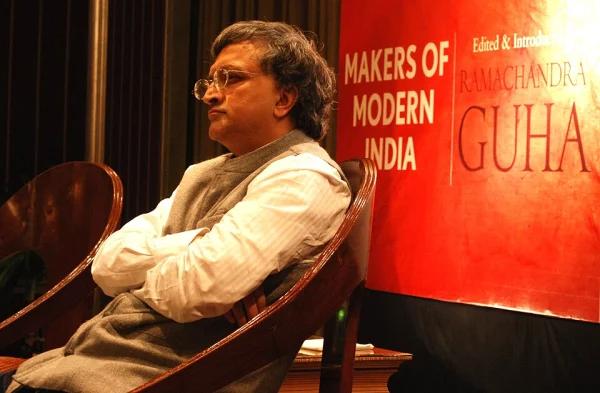
Ramachandra GuhaSource portrait · PushkarvWikimedia Commons · CC BY 3.0Resized and converted; display may crop to fit.

The person behind the words

Life & biography

Ramachandra Guha is known for work as historian, teacher, journalist. His books and essays examine modern Indian history, the environment and cricket.

Ramachandra Guha was born on 29 April 1958.

Notable works include Gandhi Before India, India after Gandhi.

Biographical citizenship or historical nationality records: India.

Read further

Sources & references

Compare original references where historical accounts differ.

Keep exploring

Quotations to explore

Search this collection

In his 2006 article on reservation, Guha argues for support for Indians from castes historically denied access to quality education.

Not rated yet · 0 ratings

In his 2006 article, Guha contrasts political expediency with the responsibility of people whose work is the search for truth.

Not rated yet · 0 ratings

In his 2009 article on foreign affairs and national security, Guha argues that youthful energy and alertness should be balanced with wisdom and experience.

Not rated yet · 0 ratings

In his 2012 article, Guha places this observation in a discussion of preferential deals involving state-controlled resources and their social and institutional consequences.

Not rated yet · 0 ratings

In his 2013 article on democracy and violence, Guha argues that the state should strengthen democratic values and institutions.

Not rated yet · 0 ratings

In a 2013 article, Guha argues that political partisanship undermines the functioning of Indian governments.

Not rated yet · 0 ratings

In a 2014 article about Siddalingaiah’s memoir, Guha reflects on its warmth and humanity while contrasting it with a tendency he sees in Indian English memoirs.

Not rated yet · 0 ratings

In a 2014 article contrasting approaches to religious faith, Guha describes song and dance as ways some people seek to comprehend the Divine.

Not rated yet · 0 ratings

In his 2014 article, Guha discusses how the contributions and sacrifices of prominent men's wives receive little attention in histories and biographies.

Not rated yet · 0 ratings

In a 2015 article discussing Rana Dasgupta’s book *Capital*, Guha describes Delhi as a centre of both cultural life and economic and political influence.

Not rated yet · 0 ratings

In a 2015 article about Supreme Court judges’ expertise, Guha points to scientific change as one complexity relevant to the cases courts confront.

Not rated yet · 0 ratings

In his 2015 essay, Guha draws on the rise and fall of cities, nations and great batsmen to caution against assuming lasting pre-eminence.

Not rated yet · 0 ratings

In his article dated May 28, 2016, Ramachandra Guha discusses threats to press freedom in India from state and non-state actors.

Not rated yet · 0 ratings

In his 2019 article, Guha argues that a government concerned with India’s future should heed scientists protesting discriminatory legislation.

Not rated yet · 0 ratings

In his January 2020 article on India’s republic, Guha distinguishes historical understanding of the present from prediction of the future.

Not rated yet · 0 ratings

In his 2020 article, Guha places this statement within a critique of personality cults and their effects on countries.

Not rated yet · 0 ratings

In his 2020 article assessing Rahul Gandhi’s political prospects, Guha begins by acknowledging that political commentators sometimes regret their judgments.

Not rated yet · 0 ratings

In his 2022 reading-list article, Ramachandra Guha introduces memoirs while reflecting on how biographies and autobiographies illuminate their times.

Not rated yet · 0 ratings

Our other brands

Add to a collection

Your collections are private. You can save a quote without creating a collection.

Create a private collection

Continue?
