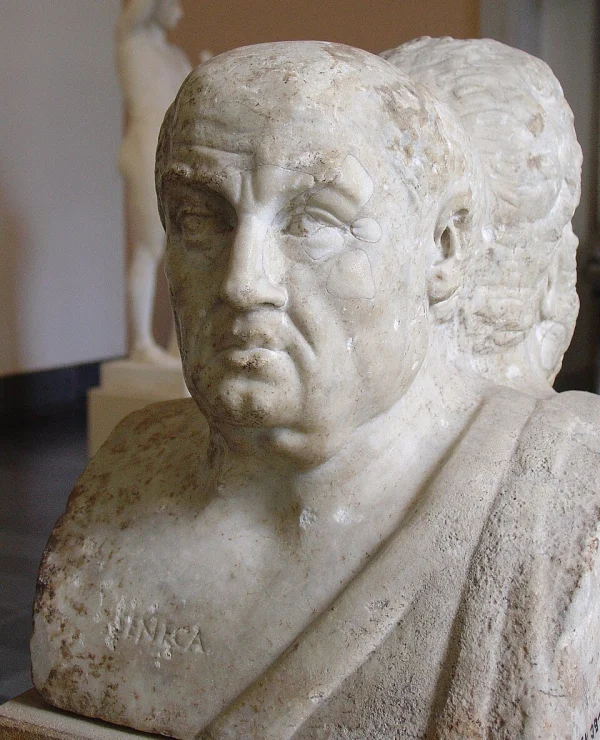
Seneca was a Stoic philosopher, statesman, and dramatist of ancient Rome. His philosophical writings include essays and letters on moral questions, and he also wrote tragedies.
SenecaSource portrait · CalidiusWikimedia Commons · CC BY-SA 3.0Resized and converted; display may crop to fit.
The person behind the words
Life & biography
Seneca, also known as Seneca the Younger, was a Stoic philosopher, statesman, and dramatist of ancient Rome. The supplied biography places his birth in Corduba and says he studied rhetoric and philosophy in Greece. He was exiled to Corsica under Claudius and later returned to tutor Nero. After Nero became emperor, Seneca served as an adviser; his influence declined over time.
Seneca wrote philosophical works, including essays and letters addressing moral issues, as well as tragedies such as Medea, Thyestes, and Phaedra. In 65 AD, he was executed by forced suicide after alleged involvement in the Pisonian conspiracy; the source notes that his possible innocence remains disputed.
Seneca addressing Lucilius in Letter 1, On Saving Time; the quoted words are Seneca’s argument, not the ancestral proverb he cites at the end. English wording retained from the cited published translation by Richard M. Gummere. Hindi is a new editorial translation from that English edition, not directly from the ancient original language.
Seneca addressing Lucilius in Letter 1, On Saving Time; the quoted words are Seneca’s argument, not the ancestral proverb he cites at the end. English wording retained from the cited published translation by Richard M. Gummere. Hindi is a new editorial translation from that English edition, not directly from the ancient original language.
Seneca addressing Lucilius in Letter 1, On Saving Time; the quoted words are Seneca’s argument, not the ancestral proverb he cites at the end. English wording retained from the cited published translation by Richard M. Gummere. Hindi is a new editorial translation from that English edition, not directly from the ancient original language.
Seneca addressing Lucilius in Letter 1, On Saving Time; the quoted words are Seneca’s argument, not the ancestral proverb he cites at the end. English wording retained from the cited published translation by Richard M. Gummere. Hindi is a new editorial translation from that English edition, not directly from the ancient original language.
Seneca addressing Lucilius in Letter 1, On Saving Time; the quoted words are Seneca’s argument, not the ancestral proverb he cites at the end. English wording retained from the cited published translation by Richard M. Gummere. Hindi is a new editorial translation from that English edition, not directly from the ancient original language.
Seneca addressing Lucilius in Letter 1, On Saving Time; the quoted words are Seneca’s argument, not the ancestral proverb he cites at the end. English wording retained from the cited published translation by Richard M. Gummere. Hindi is a new editorial translation from that English edition, not directly from the ancient original language.
Seneca addressing Lucilius in Letter 1, On Saving Time; the quoted words are Seneca’s argument, not the ancestral proverb he cites at the end. English wording retained from the cited published translation by Richard M. Gummere. Hindi is a new editorial translation from that English edition, not directly from the ancient original language.
Seneca addressing Lucilius in Letter 1, On Saving Time; the quoted words are Seneca’s argument, not the ancestral proverb he cites at the end. English wording retained from the cited published translation by Richard M. Gummere. Hindi is a new editorial translation from that English edition, not directly from the ancient original language.
Seneca addressing Lucilius in Letter 1, On Saving Time; the quoted words are Seneca’s argument, not the ancestral proverb he cites at the end. English wording retained from the cited published translation by Richard M. Gummere. Hindi is a new editorial translation from that English edition, not directly from the ancient original language.
Seneca addressing Lucilius in Letter 1, On Saving Time; the quoted words are Seneca’s argument, not the ancestral proverb he cites at the end. English wording retained from the cited published translation by Richard M. Gummere. Hindi is a new editorial translation from that English edition, not directly from the ancient original language.