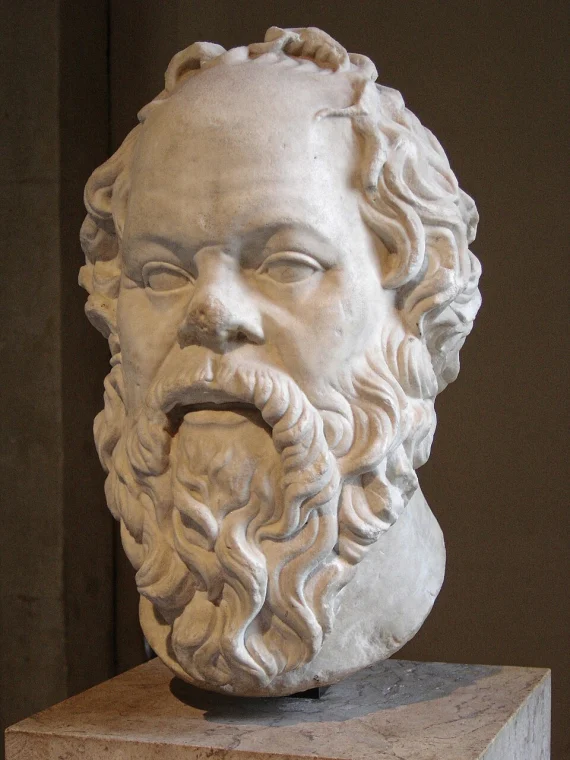
Socrates was an ancient Greek philosopher from Classical Athens who authored no texts. He is known mainly through accounts by writers including his students Plato and Xenophon.
SocratesSource portrait · Copy of Lysippos (?)Wikimedia Commons · Public domainResized and converted; display may crop to fit.
The person behind the words
Life & biography
Socrates was an ancient Greek philosopher from Classical Athens. He wrote no texts, and knowledge of him comes chiefly from posthumous accounts, particularly dialogues by his students Plato and Xenophon. The conflicting accounts make it difficult to reconstruct his philosophy.
His questioning approach is associated with the Socratic method and appears in dialogues that examine ethical and other philosophical questions. In 399 BC, he was accused of impiety and corrupting the youth, tried, and sentenced to death. The supplied account says that, as related by Plato, he was put to death by poison after refusing offers to escape. His thought influenced later philosophers and traditions.
In Plato’s account of his trial, Socrates rejects the idea that he deserves punishment, while the passage presents his words through Jowett’s translation.
In Plato’s account of Socrates’ defence, the speaker describes urging Athenians to prioritize the soul’s improvement over personal and material concerns.