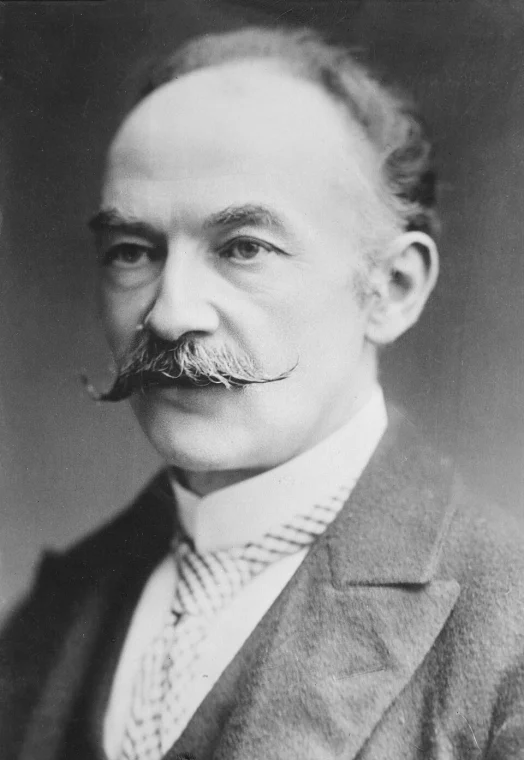
Thomas Hardy (1840–1928) was an English novelist, poet and architect. He is known for novels including Far from the Madding Crowd, Tess of the d'Urbervilles and Jude the Obscure.
Thomas HardySource portrait · Bain News Service, publisherWikimedia Commons · Public domainResized and converted; display may crop to fit.
The person behind the words
Life & biography
Thomas Hardy was an English novelist, poet and architect. Although he wrote poetry throughout his life and regarded himself primarily as a poet, he first gained fame through novels such as Far from the Madding Crowd (1874), The Return of the Native (1878), The Mayor of Casterbridge (1886), Tess of the d'Urbervilles (1891) and Jude the Obscure (1895). His first poetry collection appeared in 1898.
Many of Hardy’s novels portray tragic characters facing passions and social circumstances, often in the semi-fictional region of Wessex. His writing was critical of aspects of Victorian society, including the declining status of rural people in south-west England. The supplied source also notes the later acclaim of his poetry among younger poets and its praise by Ezra Pound, W. H. Auden and Philip Larkin.
Tess of the d'Urbervilles: A Pure Woman — fictional narration or character dialogue; topic: a growing sense of human suffering. The English text follows this source edition; Hindi is a QuoteKosh editorial translation.
Tess of the d'Urbervilles: A Pure Woman — fictional narration or character dialogue; topic: judging intentions as well as actions. The English text follows this source edition; Hindi is a QuoteKosh editorial translation.
Tess of the d'Urbervilles: A Pure Woman — fictional narration or character dialogue; topic: character beyond social convention. The English text follows this source edition; Hindi is a QuoteKosh editorial translation.
Tess of the d'Urbervilles: A Pure Woman — fictional narration or character dialogue; topic: a question about fairness. The English text follows this source edition; Hindi is a QuoteKosh editorial translation.
Tess of the d'Urbervilles: A Pure Woman — fictional narration or character dialogue; topic: the unease of feeling replaceable. The English text follows this source edition; Hindi is a QuoteKosh editorial translation.
Tess of the d'Urbervilles: A Pure Woman — fictional narration or character dialogue; topic: hope after harm. The English text follows this source edition; Hindi is a QuoteKosh editorial translation.
Tess of the d'Urbervilles: A Pure Woman — fictional narration or character dialogue; topic: the protection of knowing. The English text follows this source edition; Hindi is a QuoteKosh editorial translation.
Tess of the d'Urbervilles: A Pure Woman — fictional narration or character dialogue; topic: honesty under pressure. The English text follows this source edition; Hindi is a QuoteKosh editorial translation.
Tess of the d'Urbervilles: A Pure Woman — fictional narration or character dialogue; topic: against inherited blame. The English text follows this source edition; Hindi is a QuoteKosh editorial translation.
Tess of the d'Urbervilles: A Pure Woman — fictional narration or character dialogue; topic: opportunity and imperfect timing. The English text follows this source edition; Hindi is a QuoteKosh editorial translation.