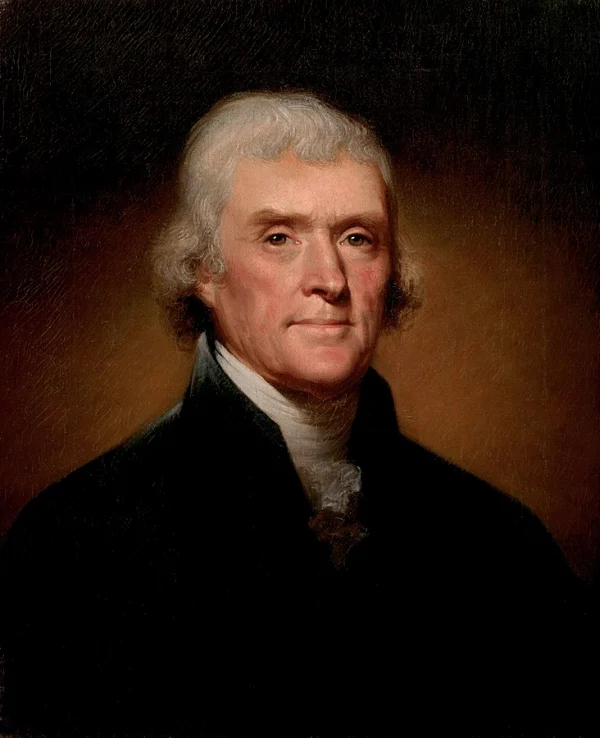
Founding Father, writer, philosopher, politician, diplomat, president
Thomas Jefferson was a Founding Father, primary author of the Declaration of Independence, and the third president of the United States from 1801 to 1809. His legacy also includes the history of his lifelong slave ownership.
Thomas JeffersonSource portrait · Rembrandt PealeWikimedia Commons · Public domainResized and converted; display may crop to fit.
The person behind the words
Life & biography
Thomas Jefferson (April 13 [O.S. April 2], 1743 – July 4, 1826) was a Founding Father and the third president of the United States, serving from 1801 to 1809. He was the primary author of the Declaration of Independence and advocated civil liberties, including freedom of speech, religion, and thought. He served as U.S. minister to France and as the first U.S. secretary of state.
As president, Jefferson oversaw the Louisiana Purchase and supported the Lewis and Clark Expedition. His political legacy is also inseparable from his lifelong ownership of enslaved people; historical assessments of his views and relationship with slavery vary.
In a letter to Republican citizens of Washington County dated March 31, 1809, Jefferson contrasts public esteem with military trophies and states what he considered government's proper aim.
In a 1788 letter to Alexander Donald, Jefferson contrasts the quiet companionship of home with the honors and preferments he says contribute little to happiness.
In a 1787 letter to James Madison, Jefferson argued that occasional rebellion could check government encroachment, while also noting that failed rebellions often strengthened it.
In a 1787 letter to Colonel Edward Carrington, Jefferson argues that public opinion can restrain conduct where formal government is absent; “the Indians” refers to Indigenous peoples of North America.