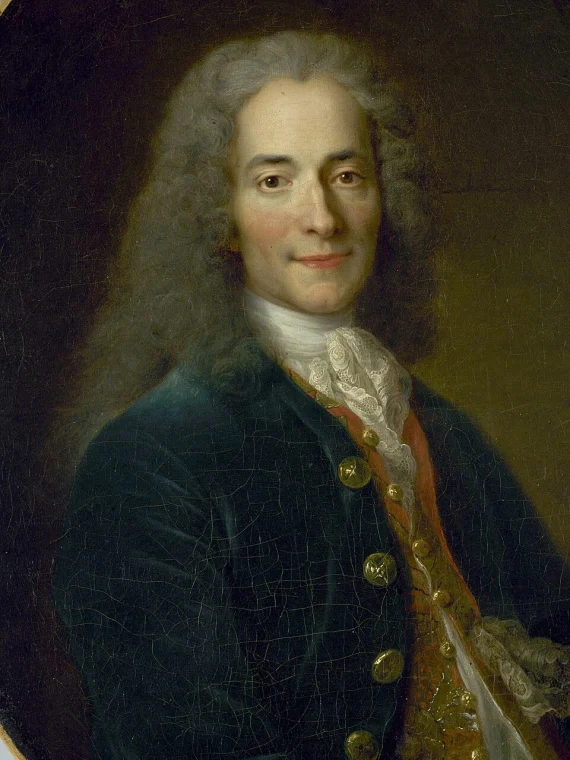
Voltaire, the pen name of François-Marie Arouet, was a French Enlightenment writer, philosopher, satirist, and historian. He advocated civil liberties, freedom of speech and religion, and separation of church and state.
VoltaireSource portrait · Nicolas de LargillièreWikimedia Commons · CC0Resized and converted; display may crop to fit.
The person behind the words
Life & biography
Voltaire (François-Marie Arouet) was a French Enlightenment writer, philosopher, satirist, and historian. He wrote in many literary forms, including plays, poems, novels, essays, histories, and scientific expositions. The source describes him as an advocate of civil liberties, freedom of speech and religion, and separation of church and state.
His writing criticized intolerance, religious dogma, and institutions of his time. His best-known work, Candide, is a novella that ridicules and comments on contemporary events and ideas, including Gottfried Leibniz’s belief that this is the “best of all possible worlds.”
Candide replies at the close of the tale. Literary passage, not a personal statement by the author or a verbatim historical record. The retained English edition/catalogue does not name a translator; no translator identity is asserted. Hindi is an editorial translation from this English edition, not directly from the French or Spanish original.
Martin proposes work rather than further disputation. Literary passage, not a personal statement by the author or a verbatim historical record. The retained English edition/catalogue does not name a translator; no translator identity is asserted. Hindi is an editorial translation from this English edition, not directly from the French or Spanish original.
The elderly farmer explains the purpose of his family’s labour. Literary passage, not a personal statement by the author or a verbatim historical record. The retained English edition/catalogue does not name a translator; no translator identity is asserted. Hindi is an editorial translation from this English edition, not directly from the French or Spanish original.
The narrator describes Martin’s pessimistic argument, not an independently established fact. Literary passage, not a personal statement by the author or a verbatim historical record. The retained English edition/catalogue does not name a translator; no translator identity is asserted. Hindi is an editorial translation from this English edition, not directly from the French or Spanish original.
The narrator contrasts Candide’s hope with Martin’s lack of hope. Literary passage, not a personal statement by the author or a verbatim historical record. The retained English edition/catalogue does not name a translator; no translator identity is asserted. Hindi is an editorial translation from this English edition, not directly from the French or Spanish original.
The narrator describes Candide and Martin debating evil during their voyage. Literary passage, not a personal statement by the author or a verbatim historical record. The retained English edition/catalogue does not name a translator; no translator identity is asserted. Hindi is an editorial translation from this English edition, not directly from the French or Spanish original.
Candide addresses Cacambo after losing much of the wealth brought from El Dorado. Literary passage, not a personal statement by the author or a verbatim historical record. The retained English edition/catalogue does not name a translator; no translator identity is asserted. Hindi is an editorial translation from this English edition, not directly from the French or Spanish original.
The narrator contrasts the kings’ thanksgiving with Candide leaving the battlefield. Literary passage, not a personal statement by the author or a verbatim historical record. The retained English edition/catalogue does not name a translator; no translator identity is asserted. Hindi is an editorial translation from this English edition, not directly from the French or Spanish original.
The narrator satirizes warfare; the line does not endorse killing. Literary passage, not a personal statement by the author or a verbatim historical record. The retained English edition/catalogue does not name a translator; no translator identity is asserted. Hindi is an editorial translation from this English edition, not directly from the French or Spanish original.
The narrator introduces Candide’s temperament. Literary passage, not a personal statement by the author or a verbatim historical record. The retained English edition/catalogue does not name a translator; no translator identity is asserted. Hindi is an editorial translation from this English edition, not directly from the French or Spanish original.