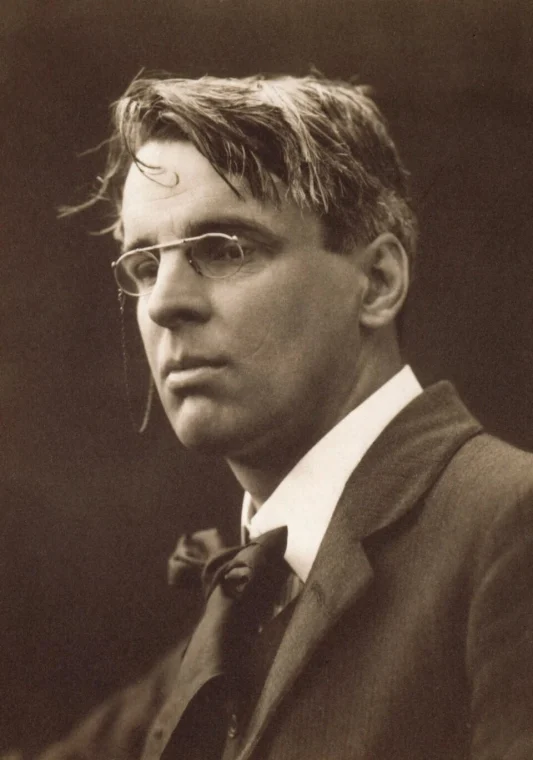
W. B. Yeats was an Irish poet, dramatist, writer and literary critic. He helped drive the Irish Literary Revival, co-founded the Abbey Theatre and received the 1923 Nobel Prize in Literature.
W. B. YeatsSource portrait · George Charles BeresfordWikimedia Commons · Public domainResized and converted; display may crop to fit.
The person behind the words
Life & biography
W. B. Yeats (William Butler Yeats) was an Irish poet, dramatist, writer and literary critic. Born in Sandymount, Ireland, he studied in Dublin and London and spent childhood holidays in County Sligo. His early writing drew on Irish legends and a range of poetic influences; his earliest volume of verse appeared in 1889.
Yeats became a leading figure in the Irish Literary Revival and, with John Millington Synge and Lady Gregory, founded the Abbey Theatre, serving as its chief during its early years. From around 1900, his poetry became more grounded in the physical world and more politicised. Major works listed in the source include The Land of Heart's Desire, Cathleen ni Houlihan, The Wild Swans at Coole and The Tower. He received the 1923 Nobel Prize in Literature and later served two terms as a Senator of the Irish Free State.
The opening stanza of The Stolen Child gives the invitation to the faery speakers; the poem’s ending also evokes the ordinary home the child will lose.