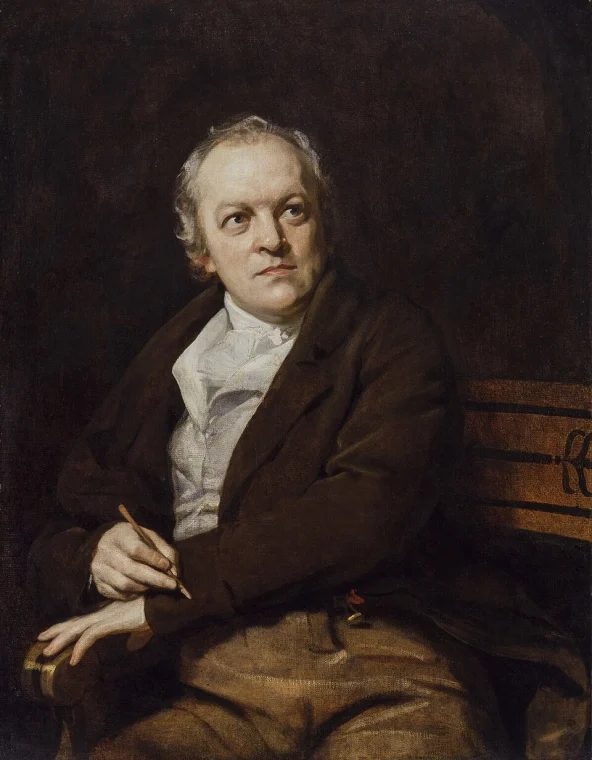
William BlakeSource portrait · Thomas PhillipsWikimedia Commons · Public domainResized and converted; display may crop to fit.
The person behind the words
Life & biography
William Blake was born on 28 November 1757 and died on 12 August 1827. He worked as a poet, painter and printmaker, producing poetry and visual art that later critics and readers came to regard highly.
Blake lived in London for most of his life, apart from three years in Felpham. His wife, Catherine Boucher, collaborated on many of his books as a printmaker and colourist; the supplied account describes her contribution as instrumental to their creation.
Songs of Innocence and of Experience — poetic passage in its speaker’s voice; topic: learning beside a living world. The English text follows this source edition; Hindi is a QuoteKosh editorial translation.
Songs of Innocence and of Experience — poetic passage in its speaker’s voice; topic: a dark image of dehumanization. The English text follows this source edition; Hindi is a QuoteKosh editorial translation.
Songs of Innocence and of Experience — poetic passage in its speaker’s voice; topic: a child's question about love. The English text follows this source edition; Hindi is a QuoteKosh editorial translation.
Songs of Innocence and of Experience — poetic passage in its speaker’s voice; topic: the mind-forged restraints of london. The English text follows this source edition; Hindi is a QuoteKosh editorial translation.
Songs of Innocence and of Experience — poetic passage in its speaker’s voice; topic: joy does not erase injustice. The English text follows this source edition; Hindi is a QuoteKosh editorial translation.
Songs of Innocence and of Experience — poetic passage in its speaker’s voice; topic: children and a generous world. The English text follows this source edition; Hindi is a QuoteKosh editorial translation.
Songs of Innocence and of Experience — poetic passage in its speaker’s voice; topic: a presence beside sorrow. The English text follows this source edition; Hindi is a QuoteKosh editorial translation.
Songs of Innocence and of Experience — poetic passage in its speaker’s voice; topic: the sacred in compassion. The English text follows this source edition; Hindi is a QuoteKosh editorial translation.
Songs of Innocence and of Experience — poetic passage in its speaker’s voice; topic: human virtues across borders. The English text follows this source edition; Hindi is a QuoteKosh editorial translation.
Songs of Innocence and of Experience — poetic passage in its speaker’s voice; topic: learning to bear love's light. The English text follows this source edition; Hindi is a QuoteKosh editorial translation.
In “A Divine Image,” Blake gives cruelty, jealousy, terror, and secrecy human features, creating a dark contrast between outward appearance and inner nature.