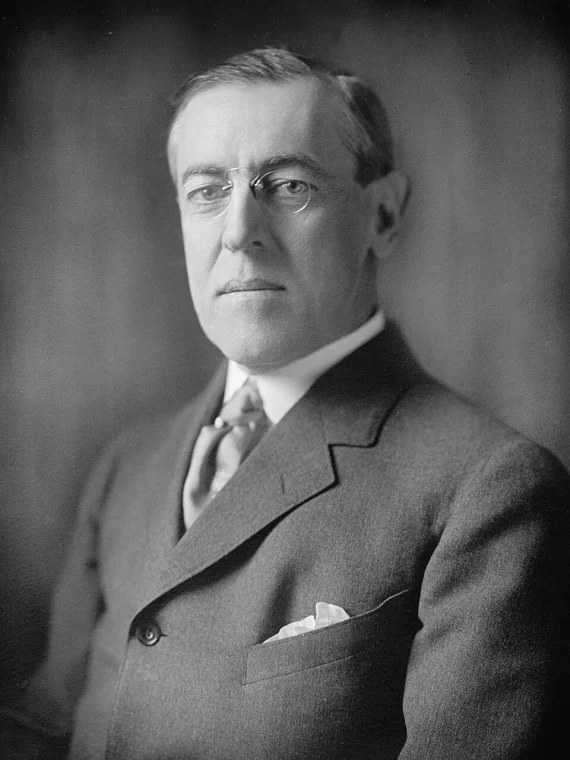
Woodrow WilsonSource portrait · Harris & Ewing, photographerWikimedia Commons · Public domainResized and converted; display may crop to fit.
The person behind the words
Life & biography
Thomas Woodrow Wilson was born in Staunton, Virginia, on December 28, 1856. After earning a PhD in history and political science from Johns Hopkins University, he taught at several colleges and became president of Princeton University. He later served as governor of New Jersey from 1911 to 1913 before becoming U.S. president.
As president, Wilson pursued the New Freedom agenda, including the Revenue Act of 1913 and the Federal Reserve Act. During World War I, he first sought neutrality and later asked Congress to declare war on Germany. He advocated for the League of Nations, but the U.S. Senate did not ratify the Treaty of Versailles. He supported racial segregation in the federal bureaucracy, a record later criticized by historians. Wilson died on February 3, 1924.
The new freedom : a call for the emancipation of the generous energies of a people — authorial reflection or argument; topic: the strength of ordinary citizens. The English text follows this source edition; Hindi is a QuoteKosh editorial translation.
The new freedom : a call for the emancipation of the generous energies of a people — authorial reflection or argument; topic: prosperity in local communities. The English text follows this source edition; Hindi is a QuoteKosh editorial translation.
The new freedom : a call for the emancipation of the generous energies of a people — authorial reflection or argument; topic: property in the service of people. The English text follows this source edition; Hindi is a QuoteKosh editorial translation.
The new freedom : a call for the emancipation of the generous energies of a people — authorial reflection or argument; topic: policy free from private control. The English text follows this source edition; Hindi is a QuoteKosh editorial translation.
The new freedom : a call for the emancipation of the generous energies of a people — authorial reflection or argument; topic: political power and secrecy. The English text follows this source edition; Hindi is a QuoteKosh editorial translation.
The new freedom : a call for the emancipation of the generous energies of a people — authorial reflection or argument; topic: size sustained by effective work. The English text follows this source edition; Hindi is a QuoteKosh editorial translation.
The new freedom : a call for the emancipation of the generous energies of a people — authorial reflection or argument; topic: a nation's strength at its roots. The English text follows this source edition; Hindi is a QuoteKosh editorial translation.
The new freedom : a call for the emancipation of the generous energies of a people — authorial reflection or argument; topic: wisdom from ordinary experience. The English text follows this source edition; Hindi is a QuoteKosh editorial translation.
The new freedom : a call for the emancipation of the generous energies of a people — authorial reflection or argument; topic: conservation and public well-being. The English text follows this source edition; Hindi is a QuoteKosh editorial translation.
The new freedom : a call for the emancipation of the generous energies of a people — authorial reflection or argument; topic: change needs a purpose. The English text follows this source edition; Hindi is a QuoteKosh editorial translation.